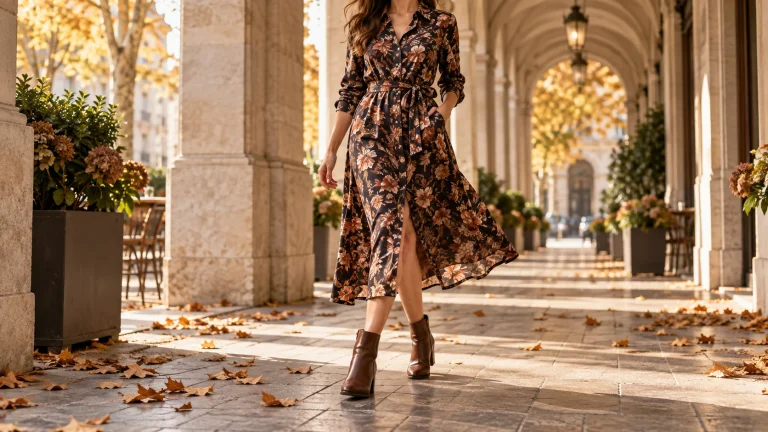
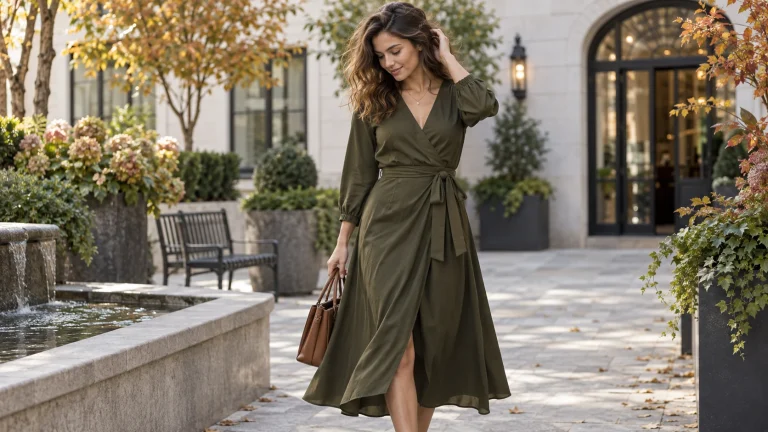
A favorite dress does not have to disappear when cold weather arrives, but piling a thick sweater, bulky cardigan, and heavy coat on top can make the outfit uncomfortable. Warmth depends on where the layers sit and whether they trap air without stopping you from moving. A close-fitting base layer, suitable tights, and weather-appropriate boots often do more than another oversized layer at the waist.
Learning how to layer a dress for winter starts with the dress itself. A knit midi dress supports a different combination from a light printed shirt dress, and both need a coat length that works when you walk. This guide offers practical ways to adjust existing dresses for commuting, indoor work, and weekend plans.
Check the actual weather and choose footwear for the ground underfoot; style is only useful when the outfit functions outside the bedroom mirror. Plan for changing temperatures rather than treating every layer as something you must wear all day.
A smooth, close-fitting base layer can add warmth without changing the outer silhouette. Try a lightweight camisole or thermal top that stays hidden at the neckline. Make sure sleeves do not bunch beneath a fitted dress. If the dress is already substantial, focus on leg and coat coverage rather than stacking more at the torso.
Opaque tights provide coverage with shorter dresses and coordinate naturally with ankle boots. Dark tights can connect a burgundy or gray dress to black footwear. Consider fabric weight and comfort rather than only color. A sheer decorative pair may not provide enough warmth for a long outdoor commute.

A turtleneck sweater dress offers built-in texture and an uncomplicated neckline. Add a long coat, tights, and boots, keeping the handbag relatively compact. Check that the dress does not pull at the shoulders when a coat is worn over it. A belt is optional if the waist already has shape.
Compare this approach with Trysho’s turtleneck knit sweater dress, checking the current product measurements and details before ordering.
A printed shirt dress may need a thin base layer plus a cardigan or blazer indoors. Keep the collar visible and avoid a bulky sweater that presses against buttons. If the hem is light, a slip can help the fabric move over tights. Let the print dictate the outerwear color.
A coat can be shorter or longer than the dress, but the visible hem should look deliberate. Walk and sit to check whether fabric catches in the coat lining. A long coat offers extra leg coverage; a cropped jacket leaves more dress visible but may need warmer tights and footwear.

Ankle boots work with tights and many midi hems. Knee-high boots can provide more coverage when the dress falls above them. Check traction for rain or snow and avoid assuming a fashion boot suits ice. Switch to indoor shoes if an event calls for them.
An outfit that is warm on a windy street may feel overheated in an office. Use a removable outer layer and a base layer appropriate to the indoor temperature. A scarf can add warmth outside and come off quickly. Keep pockets or a small bag ready for gloves and other accessories.
Raise your arms, sit, climb stairs, and walk in the entire outfit. If several layers pull at the shoulders or waist, remove one or choose a thinner fabric. Tights should not make the skirt cling uncomfortably. The goal is a dress outfit you can wear for hours without constant adjustment.
Think in terms of separate environments rather than a single temperature. You may walk to a train in cold air, sit in a heated carriage, and enter a warm office. A removable coat and scarf handle those changes better than a dress buried beneath several thick layers.
Check the dress's fabric and care label before adding a thermal underlayer: a close-fitting knit may show seams, while a loose shirt dress may have more room. If static makes the skirt cling to tights, a suitable slip can help the fabric move naturally. Keep the hands and neck warm with accessories that come off easily.
Finally, walk in the complete outfit outside briefly before committing to it; indoor mirrors cannot tell you whether the coat hem catches the dress or the boots suit the sidewalk.
Try the complete combination at home before committing to it for a full day. Photograph it from the front and side, then move as you normally would. A small adjustment to the hem, strap, layer, or accessory often solves a problem that seemed to require a completely new purchase. Compare the specific product measurements with something you already own; a category label or model photograph is only a starting point.
To layer a dress for winter, begin with a comfortable base, add tights and practical boots, and let one coat provide the main outer coverage. Knit and lightweight dresses need different combinations, so test the exact pieces together. Check the hem while walking and ensure the shoulders and waist still move freely.
Adjust for both outdoor weather and indoor heating. Trysho's dresses and boots can help you compare silhouettes, while your local conditions and comfort determine the final outfit. A well-chosen set of light layers often feels easier than several bulky ones.
Keep the layers easy to remove and your favorite dresses can stay in regular rotation.