A shirt dress looks simple on the hanger: a collar, button front, sleeves, and a skirt. Once worn, the distance between buttons, shoulder shape, waist placement, and hem all affect whether it feels effortless or restrictive.
This guide explains how a shirt dress should fit before you decide on a size online. A relaxed style need not be shapeless, and a tailored one should still let you sit and move comfortably.
On a fitted design, the shoulder seam should sit near the edge of your natural shoulder. An intentionally oversized shirt dress may have a dropped seam, so judge it by the intended cut rather than a single rule.
Reach your arms forward as if steering a car. The upper back should not pull hard across the shoulder blades. If you intend to wear a blazer or cardigan, try the layers together so the sleeves do not twist inside the outer piece.

The button placket should lie relatively flat across the bust during normal movement. If gaps appear when you sit or turn, the cut may lack room even if the waist feels loose. A hidden snap can help a small gap, but it cannot create substantial missing fabric.
Trysho's floral midi shirt dress gives a printed example to evaluate. Check the product's bust measurement and compare it with a garment that fits you, rather than relying on the print to disguise tension.
A shirt dress may have a sewn waist seam, a tie, a belt, or no defined waist. If the dress includes a seam, note whether it meets your natural waist. A tie can shape the garment, but it will not reposition the seam.
If you add a belt, try it over the dress while seated as well as standing. Trysho's suede cowhide belt can define a plain dress, but its width and buckle should feel comfortable over the fabric. Do not pull the belt tight enough to distort the button placket.
The skirt should allow a normal walking stride and comfortable sitting. A narrow cut may pull across the hips or open between lower buttons. Check the stated hip measurement and whether the skirt has a slit, pleats, or a fuller A-line shape.
Take a step up a stair while trying the dress. A style that only looks smooth standing still may become awkward during an ordinary day. If coverage changes in motion, a slip can add comfort, but a different cut may be simpler.

Long sleeves should let you bend your elbow without tugging across the upper arm. The cuff can end near the wrist or be rolled neatly for a relaxed look. If you plan to roll it, check whether the sleeve fabric has enough ease around your forearm.
A short-sleeve shirt dress is easier to layer under a fitted jacket, while a long sleeve may offer more coverage when worn alone. Choose based on the climate and when you expect to wear it.
The collar should sit cleanly around the neck whether you fasten the top button or leave it open. A stiff collar that rubs the neck can be uncomfortable all day. Check how the fabric behaves beneath a coat or blazer lapel.
If you usually wear a necklace or scarf, try it with the neckline. Too many overlapping elements can crowd the face. A simple collar often provides enough structure without additional decoration.
“Midi” varies across brands and heights. Measure a shirt dress you already like from the same shoulder reference point to the hem, then compare the listing. Consider how a belt lifts some fabric above the waist and may change where the hem appears to fall.
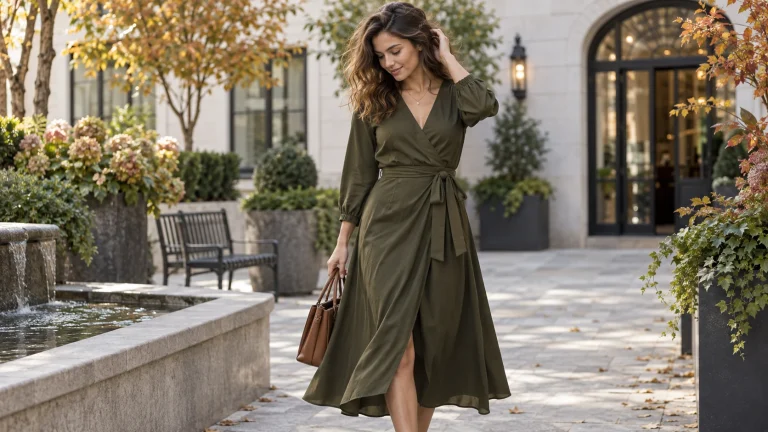
Trysho's V-neck wrap midi dress with pockets offers a different front closure if a button-front dress does not suit your fit preferences. Both should be tested for movement and coverage.
Cotton, polyester, linen blends, and other fabrics drape and wrinkle differently. A stiff woven shirt dress may stand away from the body; a fluid one may follow it more closely. Read the garment's composition and care label, especially if you expect to machine wash it frequently.
Print can make a dress visually interesting, but it cannot fix pulling at seams or buttons. Prioritize a comfortable garment measurement and choose a print or color after the fit is settled.
Button the dress as intended, sit, reach, walk, and lift your arms. Check the placket, shoulders, waist, hips, and hem in a mirror. Wear the shoes and underlayer you actually plan to use. A shirt dress that passes these ordinary movement tests is more likely to become a repeat outfit.