You pull on jeans that feel right through the hips and thighs, then turn sideways and see a space at the back waistband. Sizing down may close the gap but make sitting uncomfortable. A belt can hold the jeans up, yet it may create folds across the back or press at the front.
A jeans waist gap often means that the garment’s waist-to-hip shape differs from yours. It is a fit issue, not a body problem. The most useful fix depends on how large the gap is, whether the rise suits your torso, and how the jeans fit everywhere else.
This guide shows how to evaluate a pair you own and what to check before buying the next one. You will learn when a belt is enough, when a tailor can help, and when a different cut makes more sense. Test the jeans while seated and walking because a static mirror view does not show how the waistband behaves through a full day.
Put on the jeans without a belt and stand naturally. At the center back, note whether a finger slips easily between waist and denim or whether there is a larger open arc. Sit, squat comfortably, and walk a few steps. If the hip and thigh fabric pulls while the waist floats away, sizing down will likely trade one problem for another.
Check side seams: they should hang reasonably straight. The waistband should not roll forward or dig into the stomach when seated. A large gap paired with tight hips points toward a cut with more hip room and a smaller waist, often sold as a curvy fit.
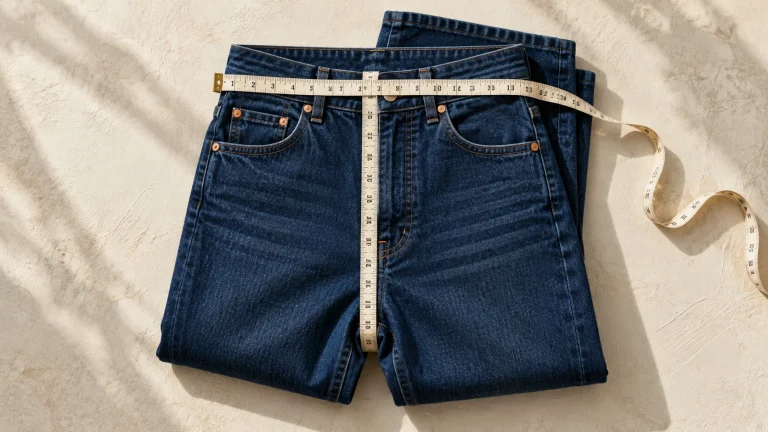
A high-rise waistband lands at a different part of your torso than a mid-rise one. If the upper edge sits above your natural waist, it may stand away despite a comfortable hip fit. Measure the front and back rise of jeans you like and compare with the listing.
Trysho’s high-waist vintage flare jeans offer a silhouette to compare. Use the size chart and fabric details; do not assume that all high-rise jeans share the same back rise or waist shape. Try the jeans with the shoes you intend to wear before judging the full outfit.

For a modest amount of extra room, a belt through properly sized loops can keep the waistband closer without distorting the denim. Choose a width that fits the loops and fasten it so you can sit and breathe normally. If the waistband gathers into obvious folds, the belt is working too hard.
Trysho’s suede cowhide belt is listed as a medium-width option; compare the current measurement with your actual jean loops. A belt also adds a deliberate line to a tucked blouse or knit, but comfort and fit should come first.
When the hips, seat, and thighs fit well, taking in the back waistband can be a useful alteration. Ask the tailor how they will preserve the center-back seam, belt loop, and topstitching. The amount that can be removed cleanly depends on the construction, fabric, and location of the pockets.
Bring the shoes and underlayers you normally wear. Pinning the waistband while you stand is only the beginning; sit and walk while it is pinned. If the entire jean is too large, altering only the back may not solve loose thighs or a dropped seat.

Elastic inserted into a waistband can help some jeans, but it changes the feel and may require opening seams and matching heavy-duty topstitching. A temporary clip or hook can also pull the back into an uneven bunch. If you have no experience sewing denim, a tailor may be safer for a favorite pair.
Do not force shrinkage as a fit plan. Heat can affect stretch fibers, color, and length unpredictably. Follow the care label. A wash may change how a pair feels briefly without reshaping the waist-to-hip relationship that caused the gap.
Look for a waistband that follows the curve at your lower back. Curvy-cut jeans often provide extra room at the hip relative to the waist, though the exact ratio varies by brand. Adjustable back tabs are another option. Compare garment measurements rather than relying on a label alone.
If you are shopping online, measure your waist where the specific rise will sit, then your fullest hip. Compare both numbers with the brand’s chart. Trysho’s women’s shoe collection can help you plan a complete outfit, but select denim fit independently of the desired styling photo.
If fabric folds under the seat or the back pockets drop unusually low, a waistband alteration alone may not be enough. The jeans could be too large through the back rise or seat. Conversely, a tight seat can pull the waistband outward when you bend, creating an apparent gap that vanishes when standing.
Try two sizes or cuts and take front, side, and back photos while standing and sitting. A pair that allows normal movement with a smooth back is more useful than one that looks ideal only for a moment in a fitting room.
They need adequate room at both, but a snug hip that restricts movement is not a good trade for a flat waistband. Altering extra waist room may be possible; adding hip room is harder.
Stretch can make sitting more comfortable, but it does not guarantee the right waist-to-hip shape. Evaluate the cut and recovery of the fabric.
For a small gap, often yes. For a large gap that bunches under the belt, a different cut or alteration will usually look and feel better.
When jeans fit the hips but gap at the waist, evaluate the rise and back shape before changing size. A belt may be enough for a small difference. A tailor can often refine a pair that fits everywhere else, while a curvy or adjustable-waist cut may save work on the next purchase.
Take measurements from jeans you genuinely enjoy wearing, including their rise, waist, and hip. Then test new pairs seated and moving. Fit is more valuable than a size number, and the right waistband should let you forget about it during the day.
Recheck the fit after sitting and walking, since a waistband that looks smooth while standing may still shift.