A blazer can fit across the shoulders yet look slightly wrong because the cuffs cover your hands or stop too far above the wrist. Sleeve length also affects function: fabric that slips over your palm can get in the way at a desk, while a very short sleeve may expose more of a shirt cuff than intended.
There is no single ideal measurement for every blazer. A classic tailored jacket, a deliberately cropped sleeve, and an oversized casual style have different proportions. The useful question is whether the length looks intentional and lets you move comfortably with the clothes you actually wear beneath it.
This blazer sleeve length guide for women shows how to check the cuff, shoulder, and arm movement before buying or altering a jacket. It also explains when rolling sleeves works, when tailoring is worth considering, and which construction details can make an alteration more complicated. Small alterations can make a meaningful difference.
Stand naturally with your arms relaxed. On a structured blazer, the shoulder seam generally follows the end of your own shoulder. If it extends far beyond or pulls inward, the sleeve may look too long or short for reasons unrelated to the cuff. An intentionally oversized design is different; its dropped shoulder is part of the cut.
Check that the collar sits against the back of your neck and the jacket closes without a strong X-shaped pull. A tailor can adjust sleeve length more readily than a badly placed shoulder, so evaluate the body of the blazer first.
For a classic long sleeve, the cuff often ends near the wrist bone while your arms rest at your sides. A little shirt cuff may show underneath if you wear a blouse. This is a visual starting point, not a strict rule; shorter or bracelet sleeves are designed to show more wrist.
Raise your arms as if typing or reaching for a shelf. The cuff will move upward. If you routinely wear bracelets or a watch, make sure the sleeve does not repeatedly snag them. If the jacket covers most of your palm at rest, it may be too long for the intended look.
Lay your favorite blazer flat and measure from the shoulder seam along the outside of the sleeve to its edge. Note the shoulder fit, sleeve shape, and whether it is lined. Compare those details with the measurements of a candidate jacket rather than relying on a generic size chart.
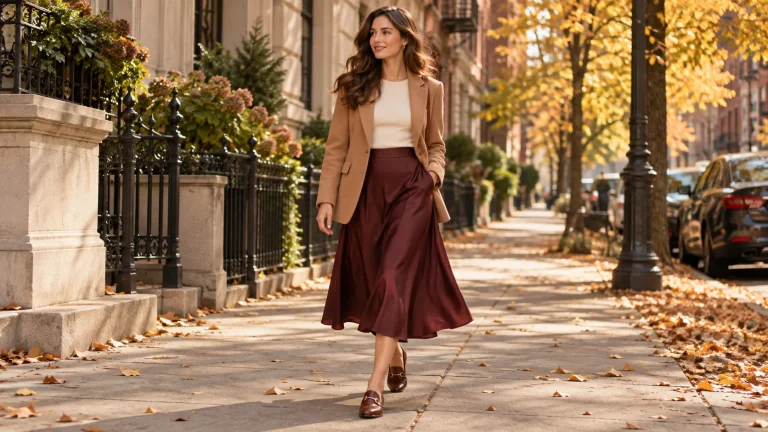
Trysho’s TRZA double-breasted office blazer is a structured reference for a traditional cuff. Confirm its current sleeve measurements and size guide before ordering. The styled photograph shows one person’s proportions; your arm length determines where it lands on you.

A jacket worn only over a thin T-shirt can feel different when layered over a blouse or knit. Test the thickest layer you would realistically wear. If the sleeve pulls at the upper arm, the cuff may ride higher. If the blouse bunches at the forearm, a wider sleeve or thinner base can help.
Smooth the shirt cuff beyond the blazer sleeve for a deliberate tailored look. A satin-finish blouse provides a soft fabric contrast, but check that both cuffs stay comfortable and do not slide into each other when you move.
For casual outfits, pushing or rolling the sleeves can make a relaxed blazer look intentional. Fold the edge evenly and expose a similar amount on each arm. On a lined blazer, an untidy lining may become visible; a tailor can sometimes secure or alter it for a cleaner result.
Rolling is not always a substitute for fit. A formal work jacket with cuffs that cover your knuckles will still feel awkward when unrolled. If you want the option of a full-length sleeve for meetings, consider alteration instead of permanent rolling.
Shortening from the cuff is often possible, but decorative or functioning buttonholes can limit how much fabric can be removed. A lined sleeve has another layer to adjust. Altering from the shoulder can be more involved because it changes the sleeve cap and armhole.
Ask a tailor to pin both sleeves while you wear the jacket and to explain where the alteration would be made. Check the cost against the jacket’s value before proceeding. Avoid cutting first and discovering later that the buttons sit too close to the new edge.

A slightly shorter sleeve can show a watch or bracelet and feel fresh with straight jeans. A full-length sleeve works with tailored pants and a blouse. An oversized blazer with a deliberately long sleeve may suit a relaxed outfit if you can still use your hands easily.
Trysho’s wide-leg trousers make a simple office base for judging the jacket’s overall proportion. The aim is to evaluate the entire silhouette, not only the last inch of the sleeve.
Photograph the jacket with arms relaxed and raised. That view reveals whether a perfect-looking cuff at rest becomes awkward in motion.
Blazer sleeve length should support the jacket’s design and your routine. Begin at the shoulders, then check the cuff near the wrist with arms relaxed and moving. A classic tailored sleeve can reveal a small amount of shirt cuff; a cropped or oversized style may intentionally behave differently.
If the body fits well but the sleeves do not, ask a tailor about the construction before buying. Rolling can work for casual days, while an alteration may serve a frequently worn office blazer better. Compare the result with one jacket you already reach for often.
If in doubt, photograph the blazer with your usual shirt and arms relaxed before deciding on an alteration.