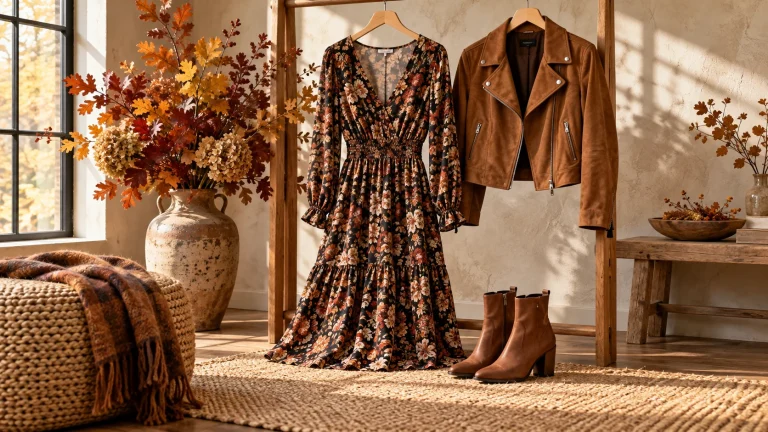
A wrap dress promises an adjustable waist, but a good fit requires more than pulling the tie tighter. The neckline may gape when you sit, the inner panel can shift as you walk, and a tie placed too high or low changes the proportions. Whether a dress is a true wrap or a fixed-front imitation also matters: one lets you adjust overlap while the other may have only a decorative tie.
This wrap dress fit guide explains how to check coverage, waist placement, sleeve movement, and hem behavior before committing to an outfit. The same checks are useful when shopping online, where a front-facing model photo does not show how the dress moves through a normal day. Aim for a secure overlap that still lets you breathe and move.
A small styling adjustment may help, but it should not compensate for a fundamentally wrong size. The examples focus on details you can check in a listing and adapt to clothes you already own. Keep a familiar garment or accessory nearby as a point of comparison; its measurements and daily comfort tell you more than a styled product photograph alone.
Look for photographs of the inside and side seam. A true wrap has panels that cross and tie; a faux wrap has a fixed front. Each can fit well, but a fixed-front style will not gain much extra coverage from tightening a decorative belt.
Stand, sit, bend slightly, and reach forward. The neckline should remain where you are comfortable wearing it. A discreet camisole or fashion tape may help a small gap, but a severe opening suggests insufficient overlap or an unsuitable cut.
For a concrete comparison, see Trysho’s floral midi shirt dress. Check its current materials, measurements, and closure before choosing.

The tie should sit comfortably without pulling the fabric upward across the bust or hips. If it rides toward the ribs, look at the garment’s waist length. A tie that requires force to stay in place will not become easier during a full day.
A secure inner panel remains overlapped as you walk and sit. Wind and stairs can expose a narrow wrap opening. Consider a slip for extra coverage, but check whether the skirt itself provides enough fabric for your preferred movement.
Use the listed bust, waist, hip, and length details, not only your usual letter size. Stretch and woven fabric behave differently. A dress that closes at the waist can still pull at the shoulders or upper arm.
For a concrete comparison, see Trysho’s suede cowhide belt. Check its current materials, measurements, and closure before choosing.

A camisole, slip, or tights can change the way the fabric moves. Test those pieces with the dress before an event. Smooth, breathable layers are usually easier beneath a close wrap than a bulky garment.
The hem may rise differently where the panels cross. Check the shortest point while walking and sitting. Choose shoes you can move in, and make sure a longer tie cannot catch on a bag or coat.
Trysho’s suede cowhide belt offers another shape to compare against these fit and styling checks.
A small snap or discreet stitch can manage a neckline that otherwise fits well. Alterations cannot create missing overlap or fix restrictive shoulders. Budget for adjustments only after the underlying dress fits comfortably.
Fasten the dress as intended, then raise both arms, sit in a chair, take several steps, and bend to pick up a bag. Note the neckline and inner panel after each movement. Look at the waist from the side: twisting fabric or pulling seams can indicate the tie is compensating for a size problem.
If you plan to wear a slip or camisole, repeat the test with it. Check whether the tie stays secure without a large, uncomfortable knot. Online shoppers can simulate the length and overlap with a dress they own, but measurements and product photographs remain essential.
When the front shifts substantially during a short test, expect the same issue during a full day.
Bring the decision back to the clothes and objects you already use. Set the relevant pieces together in daylight, check the product measurements, and test the combination for several minutes rather than judging one still photograph. Note anything you repeatedly have to pull, reposition, or carry differently. If the item only works under ideal conditions, decide whether those conditions match your usual week. Keep these points in mind:
Before ordering, pull out two outfits you wear in a normal week and test the item against both. Check it while standing, sitting, and moving; a photograph from the front alone can conceal a strap that slips, a hem that catches, or a shape that becomes awkward from the side. If the outfit depends on weather, try the layer and footwear you would actually use outdoors.
Compare measurements with something you already own that fits well. Product names such as “oversized,” “small,” or “comfortable” are helpful starting points, but the dimensions, materials, closures, and care instructions decide whether a particular item meets your needs. Keep the colors of the clothes you wear most often in mind so the choice has more than one useful outing.
No. A faux wrap may have a fixed front; inspect the construction before relying on the tie.
A camisole, snap, or tape can help a small gap, but poor overlap usually calls for another size or cut.
Related Trysho examples: solid-color midi dress, floral midi shirt dress, suede cowhide belt. Compare the current listings before choosing.
A wrap dress fits when its panels overlap securely, the waist tie sits naturally, and the neckline remains comfortable through movement. Check the construction first, then compare actual measurements and try the dress seated as well as standing. An underlayer or small alteration may refine a good fit, but it should not be used to rescue a dress that pulls or opens extensively.
When comparing Trysho styles, inspect the listed shape and fastening details rather than assuming every belted dress is an adjustable wrap. A dependable dress lets you focus on your day instead of repeatedly checking its front. If a measurement or material detail is missing, confirm it before ordering.
A useful choice should fit the ordinary days for which you actually need it.