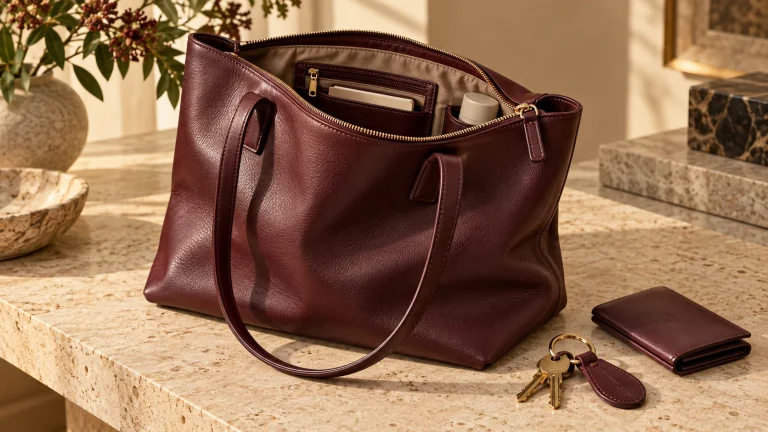
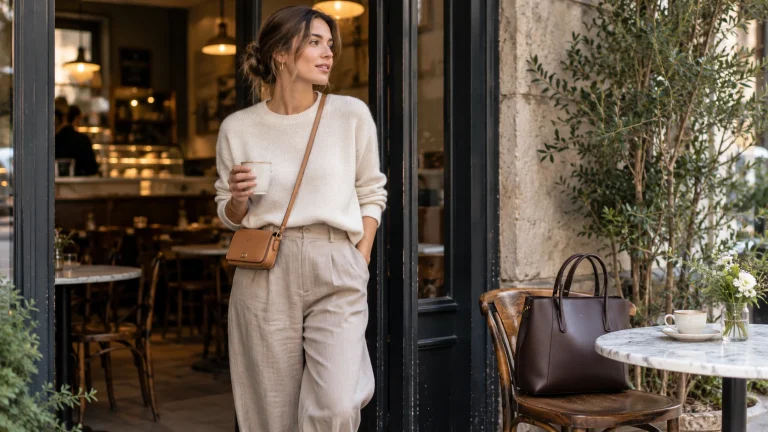
A structured handbag keeps a defined outline, while a slouchy bag relaxes and changes shape as you fill it. Both can look polished. The useful difference is how each carries your belongings and interacts with your clothing.
If you are choosing between structured vs. slouchy handbags, think first about your everyday load, commute, and preferred access. This comparison will help you make a practical choice before falling for a color or trend.
A structured bag typically has a firm base, more defined side panels, or construction that holds its shape while empty. It can stand upright beside a desk and may protect a notebook or glasses from being pressed against other objects. A rigid silhouette can also make jeans and knitwear look more tailored.
Structure does not guarantee better organization. A bag can have a firm shell and still contain one large undivided compartment. Check interior photos and the stated pockets. Trysho's structured ostrich-effect crossbody purse offers an example of a more defined shape; review its actual material and measurements before comparing it with a larger work tote.

A soft bag gives as you move and often rests closer to the body. Hobo, dumpling, and relaxed shoulder shapes can accommodate an extra light layer or other irregularly shaped items more easily than a rigid box. Some feel comfortable under the arm because their top edge bends.
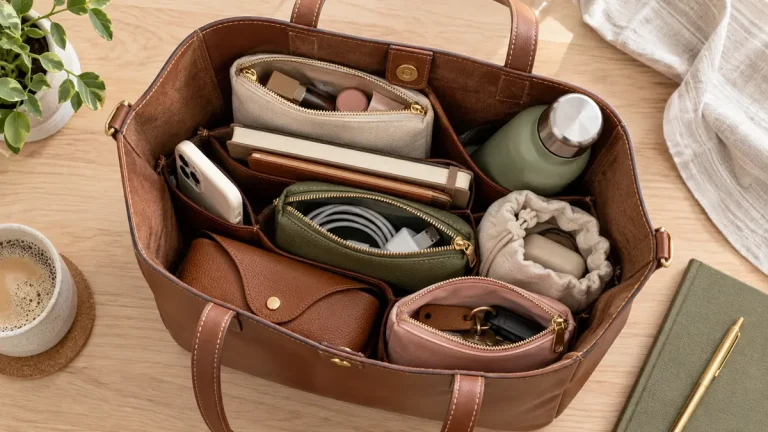
The tradeoff is that objects may collect at the bottom. Trysho's faux-suede dumpling shoulder bag has a soft silhouette with interior pockets. If you carry several small items, add a pouch or assign a pocket to your keys and phone.
A firm base and substantial hardware can add weight before you put anything inside a handbag. A soft bag may feel lighter, but the actual materials and size matter more than the silhouette alone. Review product specifications when available and consider how much you typically carry.
Load your current bag with the items you use daily and notice which strap feels comfortable. A large but lightweight-looking tote can become tiring when packed with a water bottle, tablet, and cosmetics. Distribute weight and alternate shoulders when possible.
A structured bag can complement tailored clothing and remain upright in an office. But a soft bag with a zip top and inner compartments may be more practical for a crowded commute. Trysho's contrasting-color PU shoulder bag lists a soft body, zip closure, and multiple pockets, showing that a slouchier shape can still offer organization.
Check the usable opening if you carry a tablet or notebook. Exterior dimensions alone do not tell you whether a zip line is wide enough for the object to pass through.

For errands, a compact soft crossbody can move with you and keep your hands free. A structured mini bag may be better when you want a small, tidy silhouette for lunch or dinner. Neither type should be overloaded just because its exterior looks spacious.
On a flight or train, prioritize closure and interior pockets. A soft bag may fit under a seat more easily, but that depends on its filled size. A structured bag may protect contents yet occupy more fixed space. Check transportation rules when they apply.
Use a defined bag to add contrast to flowing trousers, a sweater dress, or an oversized jacket. A soft hobo can relax a blazer and straight jeans without losing polish. The bag color need not match your shoes exactly; repeat a warm or cool tone elsewhere for cohesion.
A genuine-leather cloud crossbody illustrates a softer, rounded shape for a streamlined outfit. Compare the drop of its strap with the position where you want the bag to sit on your body.
Look at the bottom panel and feet, if present. A bag with no reinforcement may fold when set down, while a firm base helps a tote stand. Consider whether the bag will sit on a clean office surface or be placed on the floor during a commute.
Inspect how the strap joins the body. A wide strap can feel more comfortable with a heavy load, but stitching and hardware still matter. Test the zip, flap, or snap after the bag is filled; its shape can change the ease of closing it.
When not in use, empty a soft bag and fill it lightly with clean paper if you want it to retain its silhouette. Store a structured bag upright without crushing its corners. Follow the material's care label: faux suede, genuine leather, and PU should not all be cleaned the same way.
Avoid hanging a heavily loaded bag by its straps for long periods. That can strain the attachment points and change the bag's shape, regardless of whether it began rigid or soft.
Choose structured if you value an upright shape, defined styling, and easy placement beside a desk. Choose slouchy if you prefer a body-hugging feel and flexible capacity. Then check the real specifications for closure, pockets, weight, and size. Those details often decide how much you enjoy the bag after the first week.