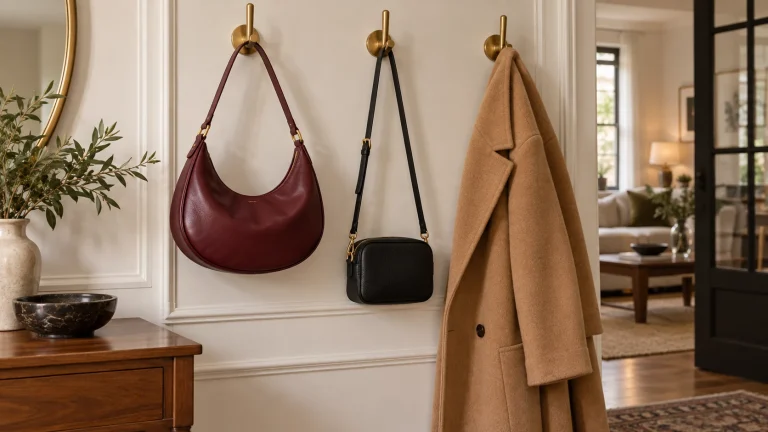
The right work bag does three jobs at once: it carries everything your day actually needs, it keeps that load organised so you are not digging at the bottom of a black hole, and it looks like it belongs in the room with you. The wrong one does the opposite — straps that dig in, a laptop corner poking your ribs, receipts and cables tangled around your keys. Choosing well is mostly about being honest about what you carry. This guide walks through size, structure and comfort, and how to match the bag to the way you really work.
Before looking at a single bag, empty your current one onto a table and sort the contents into three piles: daily essentials, sometimes items, and things that live in the bag but never get used. Most women are surprised by the third pile. Your next bag only needs to fit the first pile well and the second pile when required. For most office days that means a laptop or tablet, a notebook, a water bottle, a small makeup or essentials pouch, phone, wallet, keys, and perhaps a folded umbrella. If your list is much longer — gym kit, lunch box, a change of shoes — you may genuinely need a larger tote or a two-bag system rather than one enormous bag that hurts your shoulder.
The single most common work-bag mistake is buying a bag that almost fits the laptop. Measure your laptop’s width and depth, not just its screen size, and look for a bag whose laptop compartment or interior clearly exceeds those numbers with room for a sleeve. A 13-inch laptop fits most medium totes; a 15- or 16-inch machine needs a genuinely large tote or a structured satchel. Beyond the laptop, think about depth: a bag that fits everything flat but bulges when you add a water bottle will strain its seams and look overstuffed. If you carry a bottle daily, choose a design with enough gusset — or an interior bottle loop — so the shape stays clean.
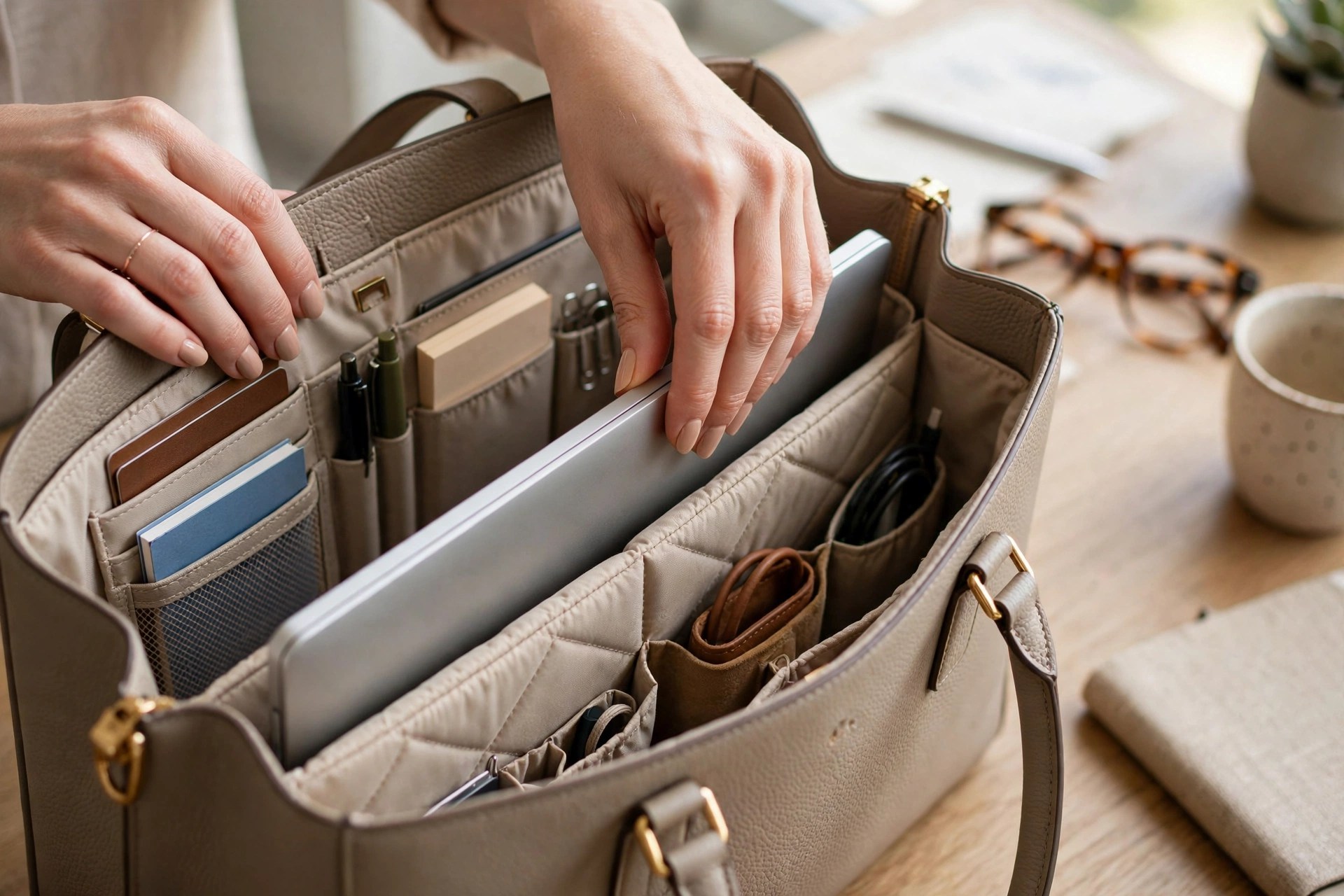
A structured bag holds its shape whether it is full or half-empty, stands upright beside your desk, and presents a polished outline against tailored clothes. A soft, slouchy bag is lighter and more relaxed but can look casual and swallow small items. For most professional settings, medium structure is the sweet spot: firm enough to stand and protect a laptop, soft enough to sit comfortably against your body. Look inside, too. One large open compartment forces you to add pouches; a bag with a padded laptop section, a zipped pocket for valuables and two slip pockets for phone and pens will stay organised with far less effort.
A work bag is carried loaded, often for a commute, so comfort is not a detail. Check three things. First, the straps: wide straps spread weight; thin straps cut in. If you will carry the bag on one shoulder for more than a few minutes, strap width and padding matter more than almost anything else. Second, the empty weight: a heavy leather bag plus a laptop plus a bottle adds up fast, so note the bag’s own weight before buying. Third, options: many women do best with a bag that offers both short handles and a longer detachable strap, so it can switch between hand, shoulder and crossbody as the day changes. Imagine your actual walk from station or car park to desk — that is the test the bag has to pass.
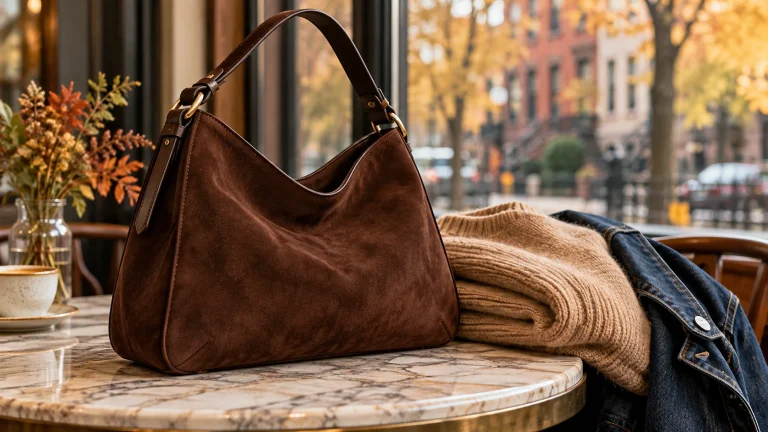
For daily use, durability beats delicacy. Smooth and saffiano-style finishes wipe clean and resist scratches; suede and soft nubuck are beautiful but mark easily in rain and crowds. If your commute involves weather, a water-resistant finish or a bag that closes fully with a zip will save you stress. For colour, black is the professional default, but tan, camel and deep burgundy often work harder across a wardrobe and show scuffs less. If you wear mostly black, a contrasting bag lifts every outfit; if your clothes are colourful, a neutral bag calms them down. Hardware in one consistent metal tone — and zips that run smoothly — are small signs the bag will age well.
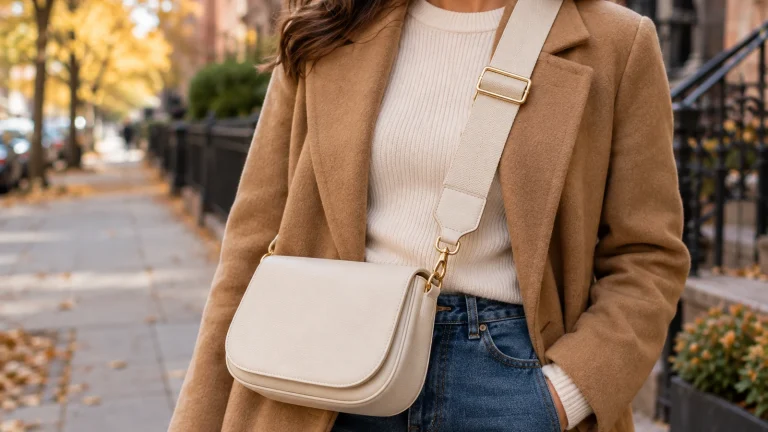
Totes are the classic work choice: open, roomy and easy to load, best for laptop-plus-paper days; choose one with a zip top if you commute in crowds or rain. Satchels bring the most structure and polish, with handles and a defined shape — ideal for formal offices, though usually heavier. Large crossbody bags spread weight across the body and keep hands free, a real advantage for train commutes; just check the strap length sits the bag at your hip, not your waist. Many women end up rotating two: a structured tote for office days and a lighter crossbody for travel and site visits. There is no single right answer — only the right match for your load and your route.
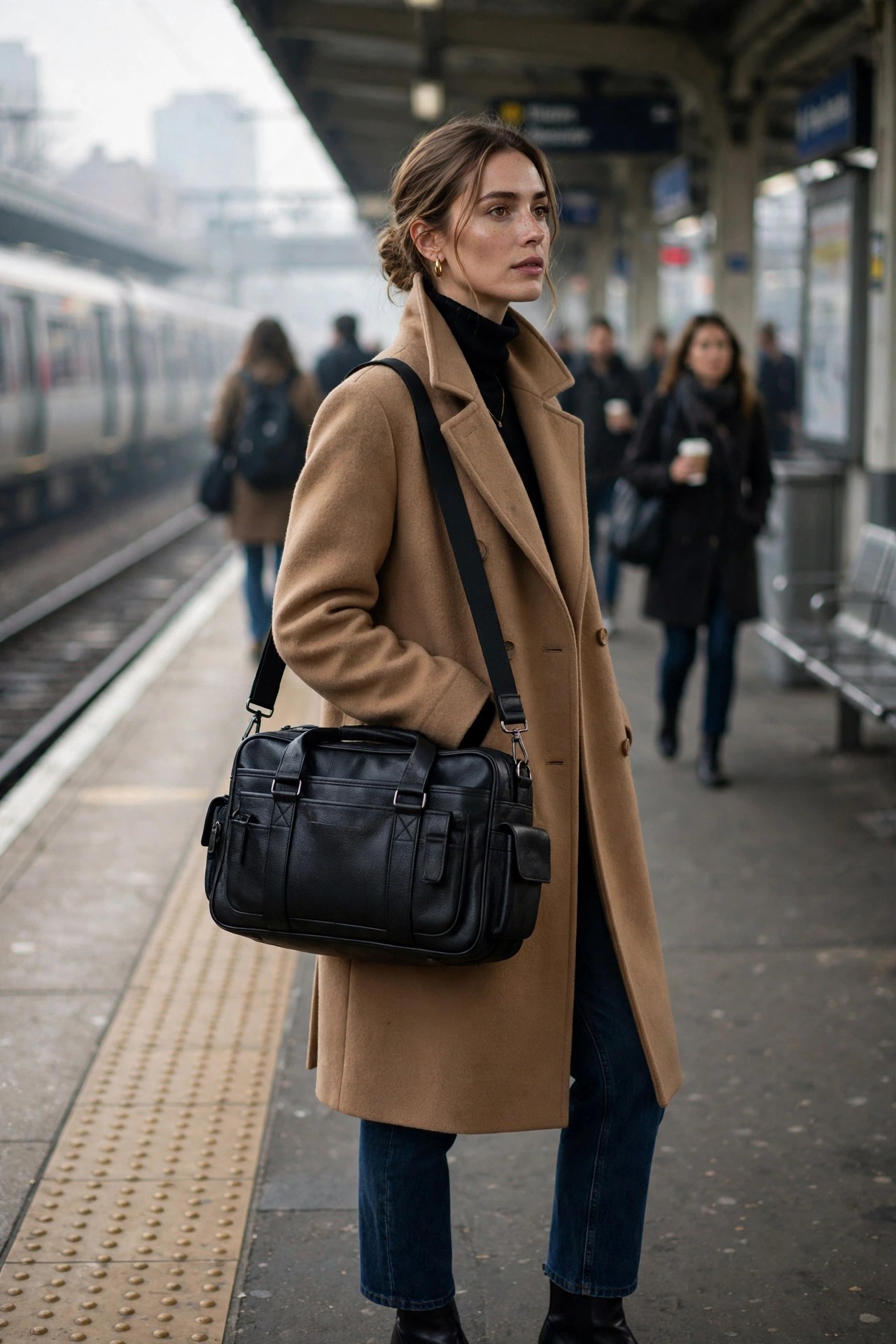
Measure your laptop and compare it with the compartment, not the headline dimensions. Load the bag with your real daily items in the shop if you can, or at home during the returns window. Walk with it on your shoulder for two minutes. Check that the zip closes over everything without forcing. Confirm there is a safe pocket for phone and cards. And finally, look at the bag against your most-worn coat — if they fight, you will stop using one of them.
Choose for the day you actually have, and your work bag will quietly make every workday easier. You will find structured totes, satchels and work-ready crossbody bags in the TRYSHO bags collection — measure once, choose well, and carry comfortably.