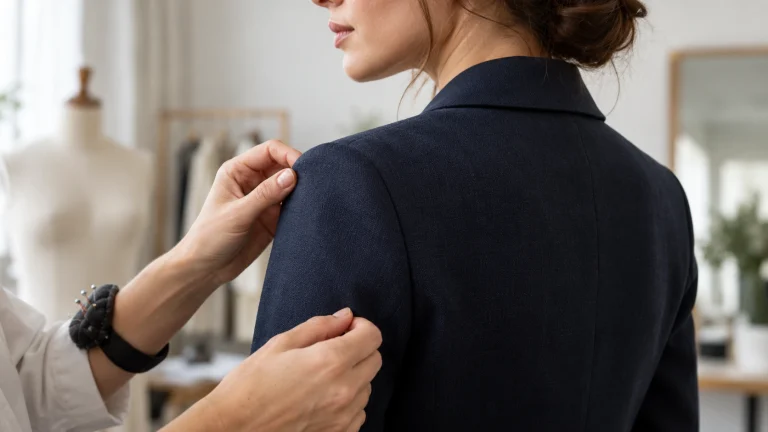
A blazer can elevate a travel outfit, but its shoulders and lapels are easy to crease when packed carelessly. You do not need special luggage to bring one along; the key is to reduce pressure on its structured areas and give it space when you arrive.
This guide explains how to pack a blazer for a weekend, work trip, or event, with options for a carry-on, a garment bag, and wearing the jacket in transit. Always follow the fabric's own care instructions when refreshing it.
A softly unlined jacket usually folds more easily than one with shoulder pads, stiff lapels, or substantial lining. Look at the fabric and seams before deciding whether to pack it flat. A heavily tailored blazer may be better worn on the journey or transported on a hanger.
Trysho's double-breasted office blazer has a more structured visual finish. When packing a comparable jacket, focus on protecting its shoulders and front panels rather than squeezing it into a small pouch.

Empty every pocket; a forgotten pen or keys can leave a pressure mark. Close one central button if the cut allows the front to lie naturally, then smooth the lapels and sleeves. If closing a button creates tension, leave it open.
Check the care tag before travel. Some blends recover from light creasing when hung, while others may need pressing by a professional. Do not assume hotel steam or a hot iron is safe on every fabric.
Lay the jacket face down on a clean, flat surface. Gently turn one shoulder inward so its shape nests against the other side, then align the sleeves without pulling the seams. Fold the lower part upward only if needed to fit the case. A lightweight shirt or tissue between layers can reduce friction.
The fold should feel loose rather than sharply compressed. If the shoulder pads will not nest comfortably, choose a different method. Practice with time to spare instead of forcing the jacket into an already full suitcase.
Place shoes and heavy items near the base of the case, away from the blazer. Lay the folded jacket on top of softer clothing, then close the case without sitting on it. A very tight zipper is a warning that the contents may be crushing the lapels.
A packing cube is useful for small clothing, but a structured blazer can crease if confined to a cube that is too narrow. Leave enough space for the fabric to keep a gentle fold.

A garment bag allows the blazer to stay on a suitable hanger and can reduce hard folds. Check the luggage size rules for the transportation you are using. A thin cover protects the jacket from contact with rough bags, though it cannot prevent all wrinkles if the garment is compressed.
On arrival, remove the cover and hang the jacket promptly. Use a hanger that supports both shoulders rather than a narrow wire hanger that leaves points in the fabric.
Wearing a blazer can save packing space, but sitting for hours may crease the lower back. If comfortable, remove it during a long flight or train ride and fold it loosely over your lap or place it safely in an overhead compartment.
An easy travel outfit is a blazer with high-waisted wide-leg trousers and a smooth top. Choose trousers according to the weather and seating comfort, and keep any handbag strap from repeatedly rubbing the jacket shoulder.
Unpack the blazer first. Hang it in a ventilated area and gently arrange the collar, lapels, sleeves, and hem. Light travel creases may relax after hanging, but deep folds may not. Do not hang a wet jacket in a closed closet.
If the fabric can be steamed, use the garment's instructions and keep the steamer at an appropriate distance. Test a hidden area. Avoid direct heat on decorative buttons, trim, or fabrics with unknown fiber content.
Travel packing works best when the jacket coordinates with at least two base outfits. A black or navy blazer can go over a satin-finish blouse for work and a plain T-shirt for dinner. A compact bag and comfortable shoes keep the other pieces simple.
Take a quick photo of your combinations before you leave. It can prevent packing a blazer that needs a pair of pants or shoes you did not bring.
Do not pack the jacket with items in its pockets, put a hard shoe heel against a lapel, or force a padded shoulder into a tiny space. Avoid storing it crushed beneath heavy luggage after arrival. And do not treat a hotel bathroom's steam as a guaranteed safe pressing method.
The most practical method depends on the jacket's structure and your bag. Give the shoulders room, unpack promptly, and you can arrive with a blazer ready to wear rather than one that needs immediate repair.