Jeans that contain stretch fibers can feel different from a pair made of mostly or entirely cotton, even when both are described as straight-leg or high-rise. Fabric affects how the waistband moves when you sit, how the knees recover, and how the leg drapes over shoes.
This stretch vs. rigid jeans guide explains what to check in product details before buying online. No fabric category guarantees a perfect fit; the cut and measurements still matter.
Rigid denim typically contains little or no elastane, whereas stretch denim blends cotton with a small amount of elastane or another elastic fiber. The percentage is only one clue. Weave, fabric weight, finishing, and the direction of stretch also influence how jeans feel.
Review the actual composition listed for the size or color you want. Two washes of a similarly named jean can have different fabric properties. If the listing does not explain the fiber content, ask before assuming it will behave like a pair you already own.

Rigid jeans often have a more substantial, structured hand feel. A straight or wide leg may hold a clear silhouette instead of hugging every curve. The waistband can feel less forgiving when sitting, so accurate waist and hip fit are especially important.
Do not buy rigid denim several inches too small expecting it to become a different size. Cotton may relax with wear and change after washing, but it cannot reliably correct a poor initial cut. Try the jeans while sitting, walking, and bending before deciding to keep them.
Stretch can make jeans easier to move in, particularly through the hips and knees. The amount of give varies widely. Some pairs feel close to traditional denim; others are much softer and cling more to the leg.
Trysho's high-waist vintage flare jeans are described with stretch in the product name. Check the current fabric composition and size chart rather than assuming a fixed level of elasticity from that description.
Recovery means how well fabric returns to its prior shape after movement. A jean that stretches comfortably but becomes loose at the knees or seat after a few hours may not meet your needs. Reviews can provide clues, though experiences vary by size and wear.
At home, sit and stand several times, then see whether the waistband and knees retain their shape. Follow the garment label when washing; excessive heat can affect some elastic fibers. Avoid treating a stretched-out pair with improvised hot washing unless its care guidance allows it.

Stretch may give some flexibility at the hip, but an uncomfortable high-rise waistband can still dig in while seated. Measure the front rise of a comfortable pair and compare it with the listing. The back rise and shape of the waistband also influence fit.
For rigid jeans, consider whether you prefer a little extra ease at the waist for sitting. For stretch jeans, check whether the waistband stays in place while walking. A belt may be useful, but it should not need to compensate for a dramatically wrong size.
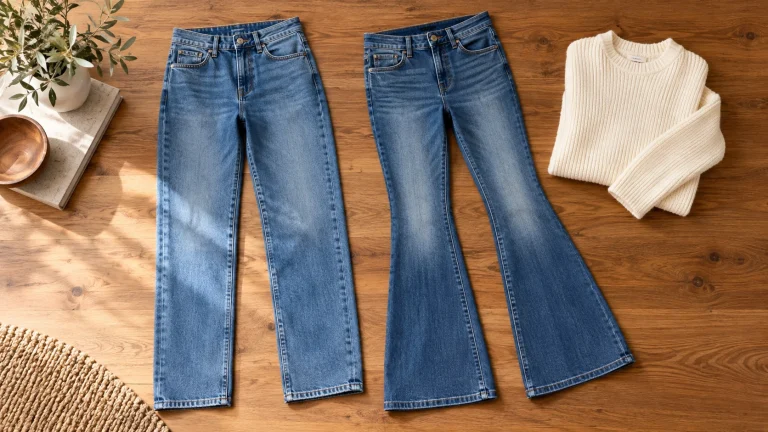
If you like a crisp wide-leg or straight shape, consider a firmer denim with sufficient room at the hips. If you prefer a closer fit or frequent movement, a stretch blend may feel more comfortable. A flare can work in either type; the fabric changes how the leg opens below the knee.
Trysho's high-waisted wide-leg trousers are a different fabric category but useful for comparing how drape changes an outfit. Do not assume the same size across trousers and jeans; use measurements from each listing.
Dark denim can transfer dye when new, regardless of whether it contains stretch. Check the maker's washing instructions and avoid rubbing a new pair against a light handbag or upholstery until you know how the color behaves.
Levi's current denim care guidance advises cold water and drying inside out in shade to help preserve color, but your specific jeans' label takes precedence. Wash with similar colors and avoid unnecessary high heat, especially for stretch blends.
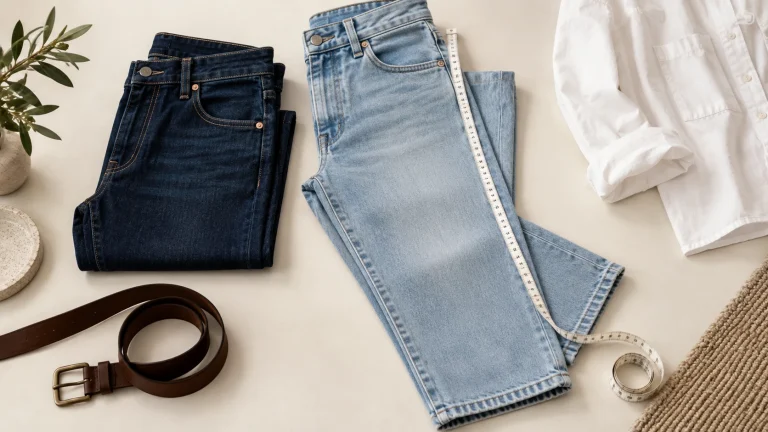
Measure a pair you already wear: flat waistband, hip width, front rise, inseam, and leg opening. Note its fiber content. Then compare those points with the new product's chart and read reviews about the fit after a full day, not only the first try-on.
If a listing omits key measurements, ask for them or choose one with clearer information. Return policies matter when comparing two fabric types for the first time.
Rigid denim offers a structured feel and makes precise sizing important. Stretch blends can provide more give but should also recover well and stay secure at the waist. Choose the cut, fabric, and inseam together, then test the jeans with your usual shoes and routine before removing tags.