An attractive handbag can become frustrating if your keys, cards, and phone disappear into one deep compartment. Yet more pockets are not automatically better: tiny dividers can reduce usable space or make a bag heavier than necessary.
This handbag pockets guide explains how to compare interior layouts before buying online and how to organize a bag according to your actual routine.
Empty your current handbag onto a table. Separate the items you reach for often, the things you need to keep secure, and larger objects such as a notebook or water bottle. This quick inventory reveals whether you need a phone slot, a zipped pocket, a roomy center, or a separate pouch.
Measure your largest object. A bag with many compartments may have no single opening wide enough for it. Review external dimensions, then inspect the interior photos. Ask for opening measurements if you need to fit a particular tablet or notebook.

A phone slot should be deep enough to hold your actual device, including its case, while remaining easy to reach. Some older bag designs have narrow slots sized for much smaller phones. If the listing does not give pocket dimensions, do not assume your phone will fit.
Trysho's large PU messenger bag lists a phone pocket, slot pocket, zipper pocket, and larger compartment. Compare the bag's photos with your phone's measurements before choosing a color or committing to a specific layout.
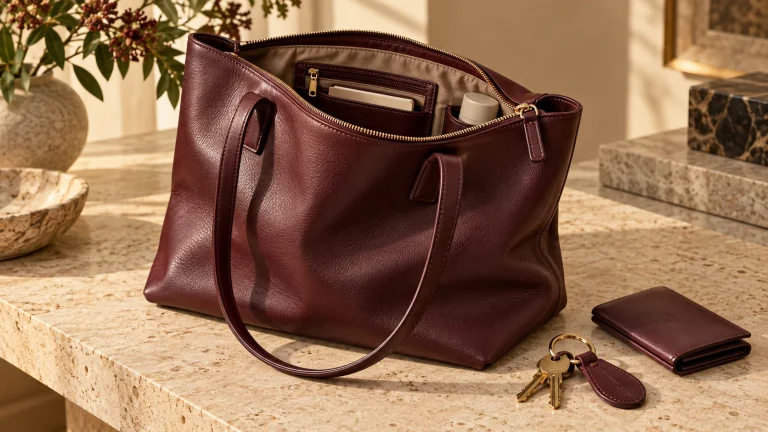
An interior zipper pocket can separate keys, cards, lip balm, or other small items from the main compartment. Check whether the pocket appears built into the lining or is a separate removable pouch. A shallow pocket may not fit a full wallet but can still keep small objects from falling to the bottom.
Trysho's contrasting-color shoulder bag lists a zipper pocket and slot pocket in addition to its zipped top. A closed main compartment and a separate interior pocket solve different problems: one contains the whole load, while the other organizes selected objects.
A center compartment can separate work items from personal items and may make a bag easier to search. But a fixed divider also divides the total interior width. A wide notebook that would fit a single cavity may no longer fit in either side.
Look at photos with the bag opened fully. If only the exterior is shown, ask for a clear interior photo. Consider whether the divider is flexible, whether it has a zipper, and whether the base is shared across both sides.

An exterior slip pocket gives quick access to a transit pass or tissues. It can also expose items to accidental loss, so avoid putting your wallet or phone in a loose outside pocket during a crowded commute.
The large PU messenger bag also lists an exterior slip pocket. Check where it sits when the bag is worn and whether it faces your body. Access and security depend on the actual construction, not only the word “pocket.”
A compact crossbody may need only a main cavity and one secure pocket. Several dividers in a small bag can reduce the room for sunglasses or a phone. A simple layout may make the bag easier to use when you carry very little.
Trysho's genuine-leather cloud crossbody is a different silhouette from a large work tote. Compare its current measurements and opening with the belongings you would bring to lunch or on a weekend walk.
A small zip pouch can group cosmetics, cables, or medication in a bag with few built-in pockets. It also makes changing handbags easier: move the pouch instead of transferring every small object separately.
Choose a pouch that fits without consuming the full base of the bag. Do not overfill it so much that its corners push against the lining. If you prefer a lighter load, one slim pouch may be enough.
A lighter lining can help you see dark items, while a printed lining may hide minor marks. The pocket stitching and closure matter as much as color. Inspect whether the lining appears attached securely and whether seams are accessible for routine cleaning.
If the bag has a deep, dark interior, use a key clip or distinctive pouch rather than relying on a flashlight every time you need something. A bag organizer can help, but check its dimensions before ordering.
The best pocket layout is the one that makes your daily essentials easy to find. Count compartments only after deciding what each one will hold.