A belt may be small, but it can change the entire shape of an outfit. It can define the waist of a loose dress, make jeans and a simple shirt look more polished, or give an oversized blazer a completely different silhouette.
Belts are practical, too. The right one keeps pants comfortably in place while introducing color, texture, or attractive hardware. The key is selecting a belt that fits the clothing, occasion, and effect you want to create.
These eight outfit formulas explain how to wear a belt with pieces you may already own, from everyday denim to office-ready dresses and jackets.
Before building an outfit, consider where you will wear the belt.
A narrow belt creates subtle definition and works well with dresses, skirts, lightweight pants, and delicate fabrics. It adds detail without becoming the center of the outfit.
A medium-width belt is the most versatile choice for many wardrobes. It fits standard belt loops and works naturally with jeans, trousers, blazers, and casual dresses. Trysho’s suede cowhide belt with a gold buckle has a 3.3-centimeter width that can complement both denim and dresses.
A wide belt produces a stronger visual effect. It can define the waist of a roomy dress, long cardigan, sweater, or coat, but may feel too heavy with thin or delicate clothing.
Always check the product measurements and your clothing’s belt loops before ordering.
Start with one of the easiest belt outfits: high-waist jeans, a tucked blouse, and a medium-width leather or suede belt.
A white, cream, pale blue, or striped shirt creates a clean foundation. Add a brown belt for a warm casual appearance or a black belt for a sharper finish. The visible waistband helps separate the top from the denim and makes the outfit appear intentional.
Try this combination with high-waist vintage flare jeans. Finish with sneakers or loafers during the day and ankle boots for dinner.
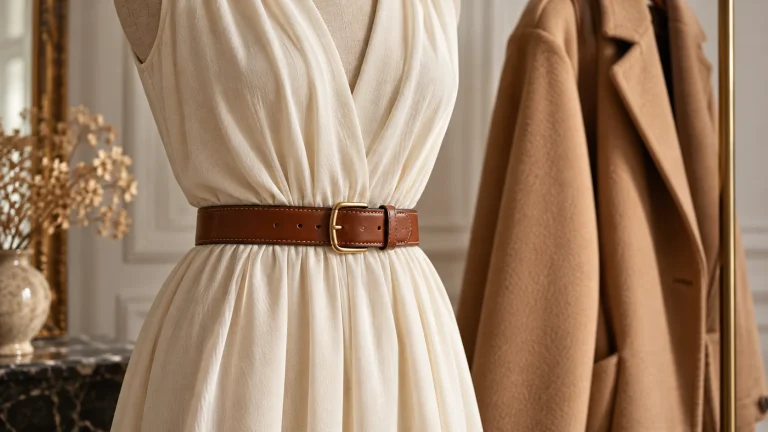
A flowing dress is comfortable, but its shape can sometimes hide the waist. Adding a belt creates definition while preserving the movement of the skirt.
Place the belt close to your natural waist—the narrower part of your torso—rather than pulling it excessively tight. Let the fabric fall naturally above and below it.
A slim tan belt looks attractive with floral, cream, olive, or navy dresses. A black belt creates more contrast, particularly with solid colors. Try the idea with a floral-print midi shirt dress for work, brunch, or a weekend event.
Belting a blazer turns relaxed tailoring into a waist-defined outfit. It works best with a slightly long or oversized jacket that has enough room to overlap comfortably.
Close the blazer, position the belt at the waist, and keep the layers underneath smooth. Pair it with straight trousers, slim pants, or simple jeans so the outfit does not become overly bulky.
The TRZA double-breasted office blazer provides a polished tailored foundation. Use a simple belt without excessive decoration because the blazer’s buttons and lapels already contribute visual detail.
A button-front shirt dress can be worn loose for a relaxed look or belted for greater definition. This is especially useful when you want one dress to work for several occasions.
For the office, choose a slim or medium-width belt in black or brown and add loafers or low heels. For the weekend, roll the sleeves, leave the collar slightly open, and wear flats or clean sneakers.
Try this formula with a short-sleeve button-front midi shirt dress. A belt helps balance the dress’s loose silhouette without removing its comfortable feel.
Tailored or wide-leg trousers look polished when the waistband is clearly defined. Tuck in a satin blouse, add a leather belt, and allow the buckle to act as a small finishing detail.
If the trousers and blouse are neutral, a gold buckle can add warmth. Silver hardware works well with black, gray, white, navy, and cool blue.
Match the belt closely to the trousers for a long, uninterrupted line, or select a contrasting shade when you want the waist to stand out. A classic black leather belt with a silver buckle can transition easily between professional trousers and weekend denim.
A belt can transform an open cardigan into a soft wrap-style layer. Wear a fitted T-shirt, camisole, or thin knit underneath, cross the cardigan comfortably, and secure the belt at the waist.
This technique is most successful with lightweight or medium-weight knitwear. Very thick sweaters may gather unevenly or feel uncomfortable under a belt.
Keep the remaining outfit simple with straight jeans, leggings, or narrow trousers. A slim design, such as a narrow cowhide leather belt, adds definition without competing with the texture of the knit.
If a coat feels shapeless, try adding a separate belt. This works particularly well with wool-look coats, long jackets, and lightweight trench-inspired outerwear.
Place the belt above bulky pockets and make sure the coat can still close comfortably. A medium or wide belt usually looks more balanced than a very narrow one because outerwear uses heavier fabric.
Choose a belt close to the coat’s color for a refined appearance. For example, combine camel with brown, gray with black, or cream with tan. Contrasting black can create a stronger, more graphic silhouette.
A belt can connect a tucked sweater and high-waist skirt, especially when the fabrics or colors are different.
Use a slim belt with pleated or flowing skirts so the accessory does not overpower the fabric. A medium belt can work with denim, A-line, or structured skirts.
Try cream knitwear with a brown skirt and tan belt, or combine a black skirt with a burgundy sweater and black belt. Finish with flats, boots, or low heels depending on the occasion.
Your belt does not need to match your shoes or handbag exactly. Coordinating the general color family or hardware is usually enough.
Using related colors creates cohesion without making the outfit look overly planned. Explore Trysho’s women’s belt collection for different widths, textures, colors, and buckle styles.
Avoid tightening a belt so much that the clothing bunches or becomes uncomfortable. The goal is to define the outfit, not restrict movement.
Also check that the belt suits the fabric. A heavy wide belt may overwhelm a delicate dress, while a very thin belt can look out of proportion over a thick coat.
Finally, do not add a statement belt when the outfit already contains several bold elements. If your clothing has a bright print, dramatic buttons, or heavy jewelry, a simple buckle will usually create better balance.
Learning how to wear a belt gives you more outfit options without requiring an entirely new wardrobe. Use one with jeans and a blouse for everyday polish, add it to a dress or cardigan for waist definition, or place it over a blazer or coat to reshape an outer layer.
Begin with one versatile medium-width belt in black or brown. Once you know how it works with your wardrobe, consider adding a slim dress belt, a textured suede option, or a wider statement design.