A belt can change the shape of a dress or coat with one small adjustment. It can define a loose waist, hold an outer layer closed, or connect shoes and a bag through color. It can also make fabric bunch, cause a coat to pull, or sit at an uncomfortable point if the length and placement are wrong.
The belt over dress or coat idea works best when you start with the garment’s construction. A fine knit, shirt dress, thick winter coat, and trench each need different amounts of give and a belt that feels proportionate to the fabric. This guide covers placement, width, and movement with practical outfit examples.
The aim is not to make every garment look fitted; it is to choose whether a defined waist improves that particular piece and remains comfortable throughout the day. The examples focus on details you can check in a listing and adapt to clothes you already own. Keep a familiar garment or accessory nearby as a point of comparison; its measurements and daily comfort tell you more than a styled product photograph alone.
Start near your natural waist, then shift slightly up or down in a mirror. The best point should let you sit and breathe without the belt riding upward. A coat’s built-in loops can guide placement, but an external belt may work differently.
A very narrow belt can disappear into thick outerwear, while a stiff wide belt can wrinkle a delicate dress. Try a medium-width style over substantial knitwear and a slimmer option over lighter fabric. The buckle should lie flat.
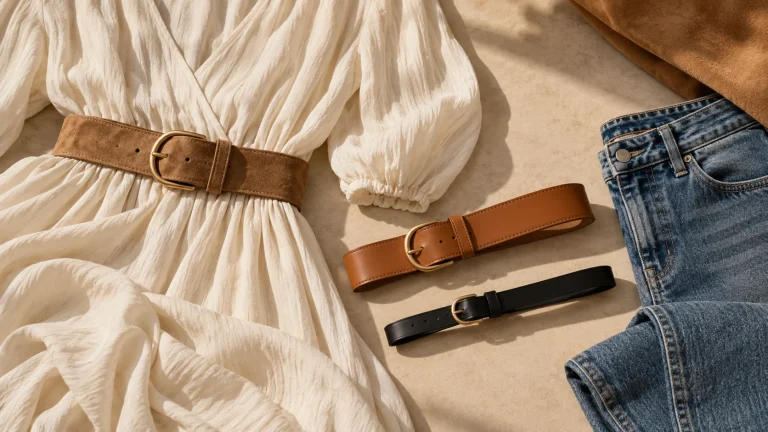
For a concrete comparison, see Trysho’s suede cowhide belt. Check its current materials, measurements, and closure before choosing.

Close the dress comfortably, then belt it without pulling fabric too tightly across the buttons. Blouse a small amount of material above the belt if needed. Check the hem after sitting because raising the waist can shorten the visible length.
A soft knit may gather under a tight belt. Fasten loosely enough to maintain the fabric’s drape and test walking and sitting. A belt in brown, black, or the dress color can define the waist without requiring a dramatic contrast.
An external belt over an open coat can hold the lapels together, but check that the coat still allows arm movement. A bulky sweater underneath changes the fit. If the original coat has a belt, compare both arrangements before adding new hardware.
For a concrete comparison, see Trysho’s V-neck wrap dress. Check its current materials, measurements, and closure before choosing.

A brown suede belt can relate to tan boots or a chocolate bag even when the shades differ. Black provides contrast over camel or cream; a tonal belt gives quiet definition. Keep prominent jewelry simple when the buckle is decorative.
A belt worn over a coat needs more length than one worn through jeans loops. Measure around the actual layers at your intended position and compare with the listed belt length and available holes. Do not assume your usual pants-belt size will work.
Trysho’s fur-collar belted winter coat offers another shape to compare against these fit and styling checks.
A dress with an intentionally straight silhouette or a coat with a sculpted waist may look better without an added belt. If it pulls at the seams or restricts your stride, the change is not serving the outfit. Let shape and comfort decide.
Try it first over a lightweight dress and then over the coat or knit you intend to wear. The circumference changes substantially, so the same hole may not be available for both. Make sure the loose end has a secure place to sit without hanging awkwardly.
Observe whether the garment twists after you sit, reach, and walk. If the coat has a bulky closure, position the buckle so it does not press on the buttons. A belt with a prominent gold buckle may be the main accessory; keep necklaces and bag hardware quieter when you want a clean result.
The adjustment should feel easy enough to repeat on an ordinary day.
Bring the decision back to the clothes and objects you already use. Set the relevant pieces together in daylight, check the product measurements, and test the combination for several minutes rather than judging one still photograph. Note anything you repeatedly have to pull, reposition, or carry differently. If the item only works under ideal conditions, decide whether those conditions match your usual week. Keep these points in mind:
Before ordering, pull out two outfits you wear in a normal week and test the item against both. Check it while standing, sitting, and moving; a photograph from the front alone can conceal a strap that slips, a hem that catches, or a shape that becomes awkward from the side. If the outfit depends on weather, try the layer and footwear you would actually use outdoors.
Compare measurements with something you already own that fits well. Product names such as “oversized,” “small,” or “comfortable” are helpful starting points, but the dimensions, materials, closures, and care instructions decide whether a particular item meets your needs. Keep the colors of the clothes you wear most often in mind so the choice has more than one useful outing.
Only if its length and flexibility work over the coat; measure around the full layers first.
It can raise or gather the fabric, so check the hem after fastening and sitting.
Related Trysho examples: suede cowhide belt, cowhide gold-buckle belt, fur-collar belted winter coat. Compare the current listings before choosing.
A belt over a dress or coat should define shape without fighting the fabric. Begin at a comfortable waist position, choose a width suited to the garment, and measure around the layers you will actually wear. Check the result while sitting and moving, not just in a standing photograph.
Color coordination can be loose; a brown or black belt often connects with accessories already in your closet. If the garment drapes better without one, leave it alone. A useful belt is an option for styling, not a rule every outfit has to follow.
If a measurement or material detail is missing, confirm it before ordering. A useful choice should fit the ordinary days for which you actually need it.