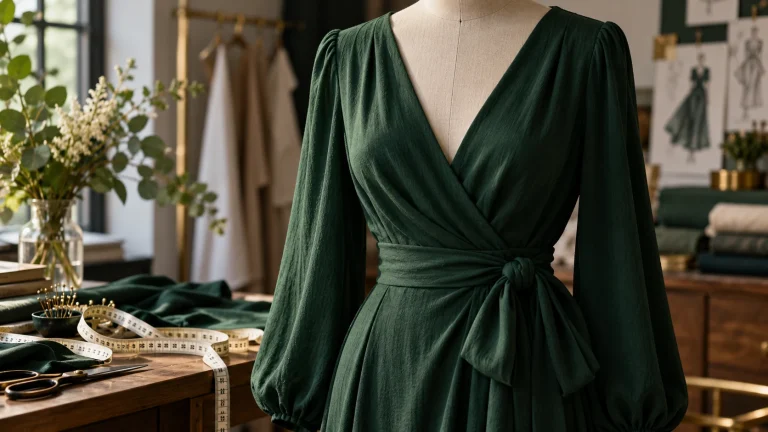
A wrap dress looks effortless until its tie loosens halfway through the day or the skirt overlap opens when you sit. The fix is not simply to pull the sash harder. A secure wrap depends on the dress’s construction, enough fabric overlap, a correctly threaded inner tie, and a knot that sits where the waist is designed to sit.
This guide explains how to tie a wrap dress securely and how to test it before leaving home. It distinguishes a true wrap, which opens at the front, from a faux wrap that only looks crossed over. Those garments fasten differently. If your dress repeatedly shifts despite careful tying, the cut or size may need adjustment; an accessory cannot create fabric that is missing.
Use these checks for an ordinary workday, dinner, or a wedding guest outfit. They are designed to make the dress comfortable while standing, sitting, and walking, without relying on a visible knot that digs into your side.
On many true wrap dresses, one panel has an inner tie that passes through a small side opening before the outer panel crosses the front. Lay the dress open and find the opening at the side seam. Thread the inner tie through it according to the garment’s construction rather than around the outside of the dress.
Keep the inner panel flat across your torso. If it twists, the outer tie has to compensate and may loosen later. Some dresses have snaps, internal buttons, or different tie paths, so follow the actual garment. A faux wrap may have a fixed seam and a decorative belt; do not pull on that belt as if it holds the dress closed.
Bring the outer panel across without stretching it. The neckline should lie comfortably and the front skirt should cover the inner skirt when you take a normal step. If you have to drag the outer edge far past its natural position to avoid a gap, the dress may be too small or cut without enough overlap for your preferred coverage.
Trysho’s V-neck wrap midi dress with pockets is a useful style to inspect for panel shape and tie placement. Compare the current listing’s construction with a dress you already own rather than assuming every wrap fastens the same way.

Bring the ties to the side or back where they naturally meet. Make a firm, flat knot or bow that stays put without squeezing your waist. A double knot can work for narrow, slippery ties, but it may look bulky under a jacket. A soft sash usually needs a little more length and surface contact than a stiff belt.
Check the waist seam in a mirror. It should stay level after you breathe normally and raise your arms. If the knot travels upward or the waist seam pulls toward one side, loosen and reposition the panels. Tying at the natural waist is a common starting point, but the dress’s own seam is the better guide.
Sit down, cross and uncross your legs, walk several steps, and reach forward. Look at the V-neck and skirt overlap each time. A neckline that stays closed while standing may open when you bend. A skirt that looks covered in a mirror may separate at the thigh while seated.
A camisole can provide comfortable coverage beneath the neckline. For an occasional event, garment-safe fashion tape or a discreet snap may help hold a well-fitting neckline in place; follow the product instructions and test it on an unseen area of fabric. Tape will not solve an entire front panel that is too narrow.
A sharp pin can snag satin, fine knit, or chiffon and may open unexpectedly. If you choose a temporary fastener, place it through a seam allowance or stable inner layer when possible, away from skin. A tailor can add a small snap or hook at an appropriate point for repeated wear.
If the dress is too loose at the waist but fits elsewhere, a suede cowhide belt may define the shape. Use the dress’s internal fastening first. An outer belt should style or fine-tune the waist, not become the only thing preventing a true wrap from opening.

Inspect whether the two tie ends are long enough for a secure knot. Smooth, short satin ends can slip. Try a flat double knot, then tuck the ends without pulling the waist too tight. If the tie itself is attached by weak stitching, stop wearing it until the attachment is repaired.
Persistent loosening can also signal that the dress is being pulled during walking because the skirt overlap is too narrow. Consider a different size, a faux-wrap design with a fixed seam, or an alteration. Trysho’s solid-color long-sleeve midi dress offers a non-wrap silhouette to compare if you prefer a lower-maintenance work dress.
An open blazer leaves a side tie visible and avoids pressing a large bow against the waist. A long coat can hide the knot outdoors, but check that its belt does not land directly on top of the dress tie. With a short cardigan, place the dress tie so the two hems do not bunch at the same point.
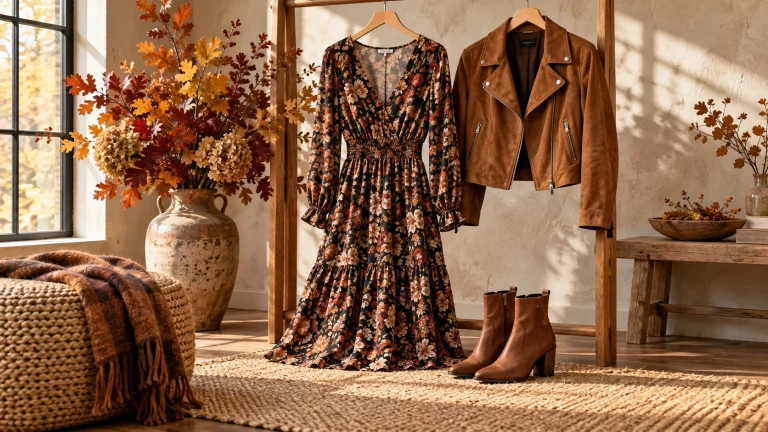
For a printed wrap dress, use quiet footwear and a bag that does not snag the sash. A compact crossbody may sit across the knot; a shoulder bag carried higher can leave it undisturbed. The goal is to keep the closure functional throughout the outfit, not only while you finish dressing.
If a check fails, adjust the fit or layer before leaving. A dress that requires constant pulling will distract you all day.
The most reliable way to tie a wrap dress is to follow its actual construction, keep both panels flat, and test the neckline and skirt in motion. Use a knot that holds without squeezing. A camisole, a carefully placed snap, or an outer belt can refine a good fit, but none can replace adequate overlap.
If the dress still opens after those adjustments, choose another size or silhouette instead of relying on a risky pin or a knot pulled too tight. A secure wrap dress should let you sit, walk, and enjoy the occasion without repeatedly checking its front.
A few minutes of moving around in the complete outfit will show whether the tie stays in place.