A tote bag can carry everything needed for work, travel, or errands, but its open interior can quickly become a collection of loose receipts, cables, cosmetics, and forgotten snacks.
The solution is not filling every pocket. Good organization gives each essential a predictable place, keeps heavy items balanced, and makes it easy to transfer belongings when you change bags.
These ten practical tips explain how to organize a tote bag without making it unnecessarily heavy.
Begin with an empty tote. Remove every item, shake out loose debris, and follow the bag’s care instructions before wiping or cleaning the interior.
Place the contents into four groups: daily essentials, work or travel items, occasional items, and things that do not belong in the bag.
Discard old receipts, wrappers, expired products, and broken pens. This reset shows how much space you genuinely need.
Trysho’s women’s retro large-capacity tote provides room for a wallet, planner, cosmetics, and other everyday necessities.
Organize the interior by function rather than placing items wherever they fit.
Useful zones include:
Keeping similar items together reduces searching and makes missing essentials easier to notice.
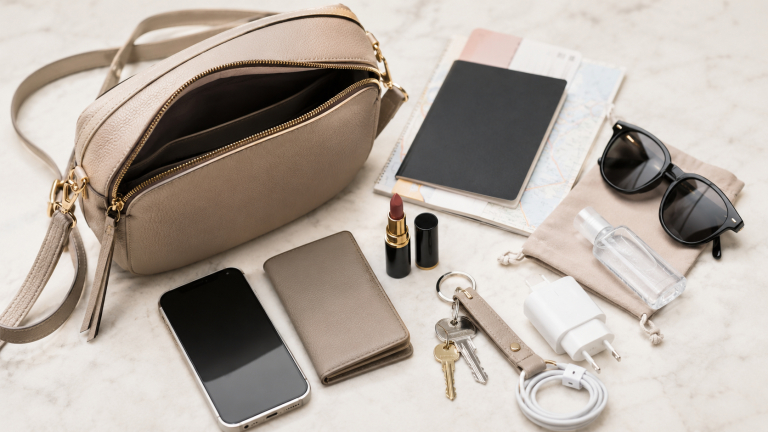
Pouches prevent tiny items from spreading across the bottom of the tote. Use different colors, textures, or shapes so you can recognize each one without opening it.
A slim pouch can hold cables and earbuds, while a wipe-clean pouch works for cosmetics or pens. Avoid using several oversized pouches because they may consume more space than the items inside.

Keys can scratch phones, sunglasses, and wallet hardware. Keep them in one interior zipper pocket, small pouch, or attached key leash if the bag includes one.
Return them to the same place immediately after opening a door. This simple habit prevents most searching and protects other belongings.
A tote with an interior pocket, such as Trysho’s Korean-style large-capacity shoulder tote, provides a dedicated place for small valuables.
The items you reach for most should not sit beneath a notebook or cosmetic pouch.
Use a secure interior pocket for your phone and place the wallet vertically near one side of the bag. Avoid placing valuable items in an open exterior pocket when commuting or traveling.
If you carry only a few cards, a compact wallet saves space. Explore Trysho’s women’s wallet collection to compare long wallets, wristlets, and slimmer formats.
Keep a tablet or small laptop in a padded sleeve rather than allowing it to move freely inside the tote. Cables should be coiled loosely and stored separately so they do not catch on other items.
Place sunglasses or reading glasses in a firm case. Do not leave them unprotected beneath a water bottle or notebook.
If the tote does not have a structured base, avoid carrying delicate electronics unless you add an appropriate protective sleeve.
Water bottles, sanitizer, perfume, and cosmetics can leak. Check every closure and store liquids upright whenever possible.
Use a sealed pouch for products that could stain the lining. Keep drinks away from electronics and important paper documents.
The structured women’s leather tote bag offers organized storage, but every liquid should still be secured independently.
A large tote does not need to be filled completely. Carrying unnecessary weight can make the straps uncomfortable and place stress on the bag.
Remove duplicate cosmetics, full-size products you rarely use, old receipts, and “just in case” items that never leave the bag.
Choose travel-size personal-care products and carry only the notebook, charger, or water bottle required that day. Alternate shoulders when possible and adjust the contents if the bag feels uncomfortable.
A simple checklist helps prevent overpacking while ensuring important items are present.
A practical work tote might include:
Trysho’s letter-print leather commuter tote is designed for daily essentials and office use.

Choose one evening each week to empty receipts, recharge power banks, replace used items, and wipe the interior if needed.
Return each pouch to its usual zone. Check pens for leaks and make sure snacks, medication, and personal-care products are still usable.
This short routine prevents the tote from gradually becoming cluttered again.
An insert can add compartments to a bag with one large open interior. It also makes changing bags faster because the organizer can be moved as one unit.
Measure the interior base, height, and opening before buying an insert. It should fit without distorting the bag or making the closure difficult to use.
An organizer adds weight, so a few lightweight pouches may be better when you carry only basic essentials.
Place stable, less frequently used items near the bottom, such as a notebook or sealed pouch. Keep fragile items and anything needed quickly nearer the top.
Remove duplicates, use travel-size products, carry only the technology needed that day, and complete a weekly reset.
Use a secure interior pocket or place it vertically near one side where it is accessible but not visible from the opening.
Learning how to organize a tote bag begins with reducing what you carry and assigning every essential a predictable location.
Use small pouches, protect electronics, secure liquids, and keep frequently used items accessible. A five-minute weekly reset will preserve the system and make your tote easier to use every day.