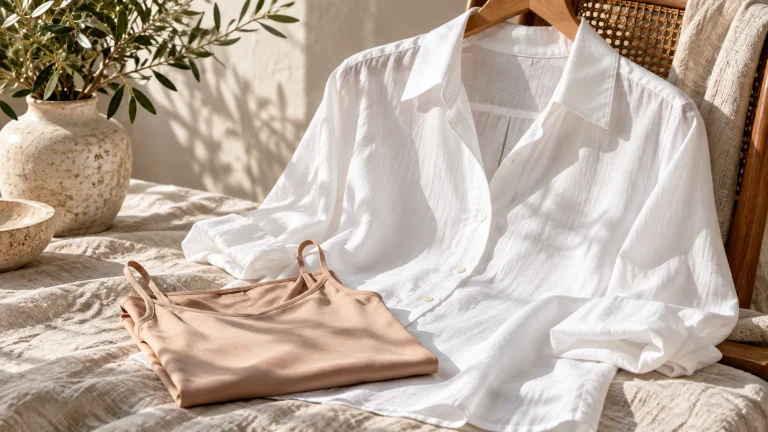
Tucking a blouse can make jeans, trousers, and skirts look more
deliberate, but excess fabric sometimes balloons above the waistband or
gathers around the hips. A slippery satin top may also escape after a
few steps, while a long cotton shirt creates an uncomfortable lump under
fitted pants.
The solution is to choose the tuck for the fabric and waistband
rather than forcing every blouse into the same neat shape. A full tuck,
front tuck, side tuck, or untucked hem can each be the right choice. The
goal is a comfortable silhouette that stays in place while you sit,
walk, and reach—not a perfectly immobile photograph.
A blouse that ends a few inches below the waistband may not have
enough fabric for a secure full tuck. One that reaches well down the
hips may have too much volume for close-fitting pants. Check its hem in
a mirror before fastening the bottoms. Decide whether the shirt was cut
to be worn loose, tucked, or either way.
Trysho’s satin-finish
blouse will behave differently from a more substantial denim
button-down shirt. Fabric texture and length change how the tuck
holds. The listed measurements are more useful than assuming every shirt
of your usual size has the same tail length.

Put on the blouse first and pull the hem down gently all the way
around. Fasten the pants or skirt over it, then raise your arms once and
loosen a small amount of fabric above the waistband. This gives you room
to move. Smooth the side seams so they align with your body rather than
twisting toward the front.
If the blouse has a long back tail, distribute it across the
waistband instead of stuffing all of it behind one hip. A waistband with
enough room for the fabric should fasten comfortably. If adding the
blouse makes the pants painfully tight, a different tuck or bottom may
work better.
Tuck only a section at the center front, roughly the width of your
hand or slightly wider, and allow the sides to fall naturally. This can
define the waist with high-rise jeans while keeping an oversized shirt
relaxed. Avoid pulling the front so tight that the sides flare
abruptly.
Check the back in a mirror. A very long untucked tail can look
accidental with short jackets. If the front and back lengths differ
sharply, choose a full tuck or let the shirt hang entirely loose.
Fluid satin slips against a smooth waistband more readily than
textured cotton or knitwear. A wider waistband or a belt may help, but
do not tighten it enough to distort the shirt or restrict breathing.
Cotton can hold a crease; smooth it after sitting and consider whether a
slightly shorter hem would be more practical.
Lightweight chiffon may show the outline of tucked fabric through
thin trousers. Place it as flat as possible and check in daylight. A
camisole underneath can add another layer of bulk; consider one only if
needed for coverage.

High-waisted trousers create a longer anchor for a full tuck. A
narrow skirt may show every fold, so a cropped blouse or careful front
tuck can work better. Jeans often tolerate a little more shirt volume,
especially in a relaxed straight cut. Trysho’s wide-leg
trousers offer a different waistband and silhouette from denim; use
the actual garment to test.
For a belted outfit, position the belt after smoothing the fabric. A
decorative buckle becomes the center of attention, so keep the tuck
relatively clean behind it.
Sit, stand, reach overhead, and walk a few steps. If the blouse comes
out immediately, the hem may be too short or the waistband too loose. If
it bunches uncomfortably when sitting, remove some excess fabric or use
a partial tuck. Adjust once based on movement rather than repeatedly
tugging at the shirt all day.
An untucked blouse can be intentional with narrow pants or a
structured blazer if the hem ends at a clean point. Long tunics, side
slits, and curved hems are often designed to be visible. The waist does
not always need to show; balance can come from sleeves, neckline, or
streamlined shoes.
A good blouse tuck starts with the shirt’s length and the bottom’s
waistband. Smooth the fabric for a full tuck, use a small front tuck for
a relaxed look, and let a long or shaped hem remain visible when that
fits the garment. Test the result sitting and walking, not only standing
still.
There is no reason to force slippery or bulky fabric into a tight
waistband. Choose a combination that remains comfortable and keeps its
intended shape through your normal day.