A blazer over a sweater seems like an easy cold-weather outfit until
the sleeves bunch, the shoulders feel tight, or the jacket will not
close. The pieces may each fit well on their own yet compete when
layered. Thin knitwear, armhole space, jacket structure, and sleeve
length all matter.
You do not need a special oversized blazer for every sweater. Begin
with the layer you intend to wear most often, then test movement in the
complete outfit. This guide helps you select sweater shapes that work
under tailored jackets and recognize when a blazer is simply too snug
for that combination.
A smooth, fine-gauge crew neck or turtleneck generally takes less
room than a chunky cable knit. It slides under the lining and avoids a
visible ridge across the upper arm. A fitted knit does not have to be
tight: allow enough room to move and breathe comfortably.
Trysho’s slim-fit
turtleneck knit sweater is one shape to compare with a double-breasted
office blazer. Review the product measurements and material details
for the exact sizes. A blazer styled over a thin top in a product photo
may not accommodate a substantial sweater.

Put on the sweater, then the blazer. Move your arms forward as if
reaching for a steering wheel, raise them slightly, and cross them in
front of you. Pulling across the upper back or a seam that shifts off
the shoulder signals insufficient room. A larger size may help, but it
can also make the torso too wide; compare cuts rather than automatically
sizing up.
Watch whether the sweater seam sits underneath the blazer’s shoulder
seam. Thick drop-shoulder knits create extra folds under a structured
jacket. A regular shoulder or slim raglan can sometimes layer more
smoothly.
Hold the sweater cuff gently as you slide your hand through the
blazer sleeve. This keeps the knit from being pushed up toward the
elbow. Once the jacket is on, adjust the cuff so it lies flat. If the
sweater sleeve is much longer than the jacket’s, let only a deliberate
narrow edge show or fold it neatly under.
Do not solve chronic sleeve pressure by rolling a thick knit inside
the arm. That creates a bulky ring and reduces circulation. Choose a
lighter sweater or jacket with a roomier sleeve.
An open blazer can look intentional over a knit and often provides
more movement. It should still hang cleanly. If the front edges swing
far apart because the sweater is too thick, or the lapels twist, the
layers may not be compatible.
When buttoned, the jacket should not strain at the waist or form
sharp pulls across the chest. Leave enough ease to sit comfortably.
Double-breasted construction has less flexibility in front than an open
single-breasted shape.

Straight jeans and loafers give a blazer-and-sweater outfit a casual
finish. Tailored trousers make it suitable for many offices. If both
sweater and blazer are relaxed, show a little waistband with a tuck or
choose a streamlined pant leg. A long knit hanging below a short jacket
can work, but the visible hem should look deliberate.
Try dark gray trousers, an ivory knit, and a black blazer. A camel
knit can warm navy tailoring; a burgundy knit adds color under charcoal.
Check how the collar sits beneath the lapels. A tall turtleneck can
stand on its own without a scarf indoors.
A bulky sweater may work better under a roomier coat than under
fitted tailoring. If the jacket is an essential work piece, wear the
thick sweater alone on another day or switch to a thin thermal base
layer. More layers do not automatically mean more comfort if they
restrict motion.
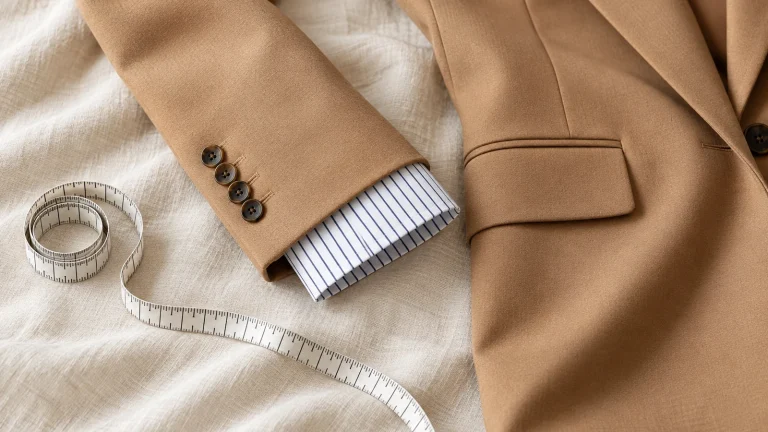
Measure the shoulders, bust, upper arm, and sleeve of a blazer you
already wear comfortably over knitwear. Compare garment dimensions, not
only labeled sizes. Note whether the new blazer is lined and whether its
fabric has give. Try the exact sweater with it before removing tags.
The easiest sweater-under-blazer outfit uses a fine knit, enough room
at the shoulder and upper arm, and sleeves that lie flat. Test reaching
and sitting with both pieces on. Leave the blazer open if that is the
cleaner silhouette, but do not ignore pulling that makes movement
uncomfortable.
If your favorite chunky sweater does not fit beneath tailoring,
choose a roomier coat or wear it separately. The best layered outfit
should work through a full day, not just for one mirror photograph.