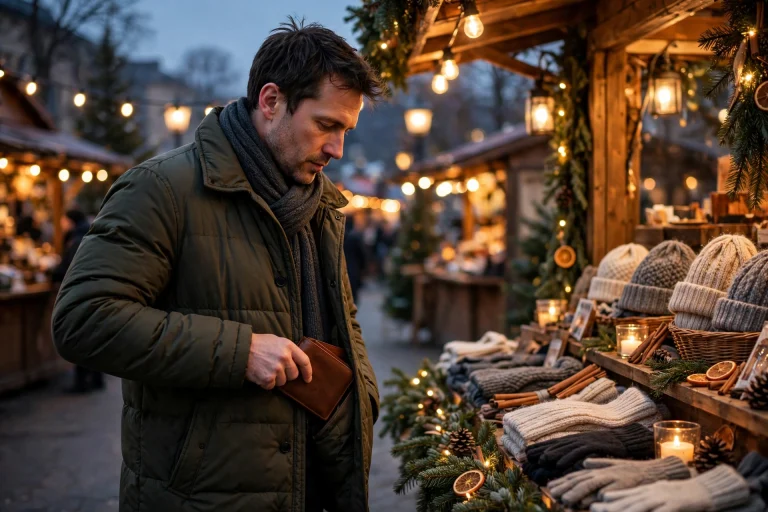
Most of the discomfort of a cold day is not really about your coat. It is the wind across your ears at the station, the drizzle settling on your hair, and that slow chill that sets in on a short walk and stays with you indoors. A winter hat fixes all of it for very little money, yet many men still treat hats as an afterthought, grabbing whatever is by the door. In late November, with early winter settling in properly, it is worth understanding the main styles. Beanies, watch caps and warmer structured hats each do a slightly different job, suit different faces and work with different clothes. This guide explains them plainly, so your next hat is a choice rather than a guess.
The beanie is the hat most men own, and for good reason. It is a soft, close-fitting knitted hat that pulls down over the ears, packs into a coat pocket and works with almost any casual outfit. A classic cuffed beanie, with the brim folded up once, gives you a double layer over the ears where you need warmth most, and that folded band also adds structure, so the hat looks deliberate rather than slumped.
Fit and fabric decide whether a beanie looks sharp or scruffy. It should sit snugly without squeezing, with the cuff roughly at the eyebrows and no loose peak of fabric at the crown. Ribbed knits hold their shape best. Choose wool or a wool blend for real warmth and a hat that copes with damp air; acrylic beanies are cheaper and fine for mild days, but they can feel clammy and lose their shape sooner.
The watch cap is the beanie’s close relative, named after the caps worn by sailors standing watch in cold weather. It is knitted shorter and worn higher, usually sitting above the ears or just covering their tops, with a tight, shallow fit that gives it a neat, purposeful look. Because it sits closer to the head, it pairs especially well with smarter coats, where a slouchy beanie can look out of place.
That shorter cut is also its limit. On a bitter day with real wind, a watch cap will not protect your ears the way a cuffed beanie does, so think of it as the hat for cold rather than freezing weather, or for men who run warm. It suits shorter hairstyles particularly well and looks strong in navy, olive, dark grey and black.

When the temperature drops properly, step beyond the standard beanie. A fleece-lined beanie keeps the same simple shape but adds a soft inner band that blocks wind and feels comfortable for hours, making it the best choice for long walks, outdoor work and standing around at sport. The lining also stops the itch some men get from coarse wool against the forehead.
Trapper and ear-flap styles offer the most protection of all, with flaps that tie down over the ears and sometimes a peak to keep sleet off your face. They are not the most formal hats, but on a genuinely freezing day nobody regrets wearing one. At the other end of the scale, a lined flat cap in tweed or plain wool adds warmth with a smarter, more traditional feel, and works beautifully with overcoats and scarves.
The right hat balances your face rather than copying its shape. Men with a rounder face usually suit a beanie with a little height or texture at the crown and a defined cuff, because the added structure lengthens the overall look. Avoid very tight, thin caps worn low, which can emphasise roundness. Men with a longer face should do the opposite: choose a cuffed style worn a touch lower, in a softer knit, and avoid tall styles that add more height.
Hair matters too. If you wear your hair longer, a slightly slouchier beanie gives it somewhere to go and looks relaxed rather than stuffed in. For very short hair or a shaved head, warmth and comfort come first, so look for a soft lining and no scratchy seams.

Start with the colours that go with everything. Charcoal, navy and black will work with almost any coat a man owns, hide the marks of winter wear best and never look out of season. Burgundy, olive and mustard add interest without shouting, and they pair well with the browns and blues most winter wardrobes are built on.
For fabric, natural fibres still lead. Merino wool is warm, soft and naturally resistant to odour, so it copes with daily wear better than most synthetics. Lambswool is warm and hard-wearing but can feel scratchy to some men, which is where a fleece band inside helps. Cotton knits are comfortable but a poor choice for real cold, because cotton holds moisture and feels colder when damp. A sensible winter set is simple: one dark cuffed beanie for everyday wear, one lighter cap for milder days, and, if your winters are harsh, one properly lined hat for the coldest weeks.
A good hat should last several winters, and looking after one takes almost no effort. Wash knitted hats gently and rarely: a cool hand wash with a little mild detergent, or a wool cycle if the label allows it, is enough once or twice a season unless the hat gets genuinely dirty. Never wring a wet beanie. Press the water out in a towel, reshape it with your hands and dry it flat away from direct heat, because hanging a wet knit stretches it out of shape.
Between wears, let the hat air rather than leaving it scrunched in a damp coat pocket, and store it clean at the end of the season so moths are not tempted.
Time to retire the hat by the door and choose one properly? Take a look at our men’s hats collection at Trysho, where beanies, watch caps and warm winter styles come in the classic colours and knits covered here, ready for the coldest weeks of the season.
TRYSHO
New arrivals & outfit ideas, first — straight to your inbox.
TRYSHO
Welcome to Trysho — here’s 10% off your first order:
WELCOME10
Tap the code to copy it
Use it at checkout — it never expires.
Start Shopping