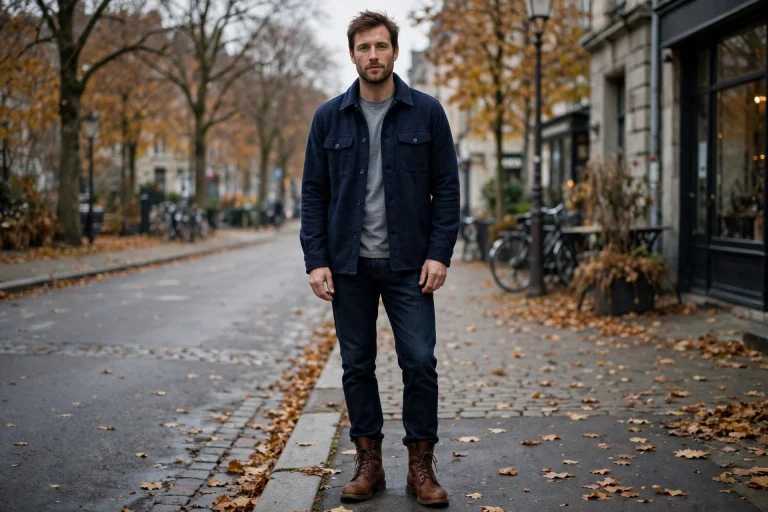
Running in late November and early winter is rewarding, but it asks more of your shoes than a summer jog does. The pavements are colder, wetter and often darker by the time you get out, and your feet feel every mistake in fit and grip. A pair of running shoes that felt fine in September can slide on wet leaves, soak through in minutes or leave your toes numb on a frosty morning. Choosing the right pair for winter is not about buying the most expensive model. It is about matching cushioning, grip, warmth and fit to the runs you actually do, so you keep going comfortably through the coldest weeks.
Three things change in winter: the surface, the temperature and the light. Wet tarmac, damp paths and fallen leaves reduce grip, so the outsole matters more than it does in dry weather. Cold air stiffens some foams and makes a shoe feel firmer than it did in summer, which can change how your legs feel on longer runs. Shorter days mean many men run at dawn or after work in low light, so reflective details stop being a nice extra and become a genuine safety feature.
Fit is still the most important decision. You need roughly a thumb’s width between your longest toe and the end of the shoe, because your feet move forward slightly on each stride and swell during a run. Toes should be able to spread naturally without pressing against the sides. If the shoe pinches across the forefoot in the shop, it will feel worse at mile five in the cold.
Try shoes on later in the day, when your feet are at their largest, and wear your winter running socks. Walk, jog on the spot and press down as if running downhill to check your toes do not jam into the front. A secure heel with room in the toes is the combination you want: the heel should not slip, but the front should never feel cramped.

For mostly road running in winter, look for a rubber outsole with enough coverage and texture to bite on wet tarmac. Very smooth, worn or purely foam soles can feel uncertain on painted lines, drain covers and wet leaves. Deeper, more open lugs give better grip on muddy paths and park trails, but they can feel clumsy and wear faster on hard roads, so match the tread to your usual route.
If most of your runs are on pavements with the occasional park path, a road shoe with a grippy rubber outsole is the sensible middle ground. If you regularly run on trails, frosty grass or unpaved paths, choose a trail shoe with stronger lugs and a more protective upper. Be honest about your route: buying a rugged trail shoe for city streets will not make winter running safer, and it may make it less comfortable.
Cushioning is a comfort choice, not a status symbol. More cushioning can help on longer road runs and for heavier runners, while a firmer, lighter shoe can feel quicker for shorter sessions and speed work. In winter, when cold muscles and stiff joints are more common, many men find a moderate, protective cushion more forgiving for easy miles. There is no single right level, only the level that lets you finish your usual run without sore feet or aching shins.
A standard mesh upper breathes well but lets cold air and rain straight in. For winter, a denser knit or engineered mesh keeps more warmth and sheds light rain for longer. Fully waterproof shoes can help on very wet routes and trails, but they also drain slowly once water gets in over the ankle and can feel warmer on milder days. For most road runners, a water-resistant, close-knit upper with good socks is the better balance.
Socks are part of the shoe decision. Merino or synthetic running socks keep feet warmer when damp and reduce blisters better than cotton, which holds cold moisture against the skin. Pair them with a shoe that still has toe room, as discussed above. After a wet run, remove the insoles, loosen the laces and let the shoes dry naturally away from a radiator, stuffed loosely with newspaper if needed. Never start the next run in shoes that are still damp inside if you can avoid it.

Choose a colourway with reflective elements on the heel, sides and upper if you run in the dark, and do not rely on the shoes alone: a light or reflective top is still essential. Check that the laces stay tied when wet, as some smooth laces work loose in rain. A simple double knot or lock lacing, where you use the extra top eyelet to hold the heel, can stop heel slip and black toenails on longer runs.
Rotating two pairs, if you have them, helps in winter more than in any other season. One pair can dry properly while you run in the other, and both last longer. If you only have one pair, at least alternate run days where you can in very wet weeks, and replace shoes that have lost their grip or cushioning, however good they still look. Most running shoes are ready to retire after roughly 500 to 800 kilometres, depending on the model and the runner.
For short weekday runs on city pavements, prioritise fit, wet-road grip and reflectivity. For longer weekend runs, add cushioning and a secure, blister-free fit to the top of the list. For park and trail running, put lugs, protection and a sturdier upper first. Write down your route, distance and usual time of day before you shop, and the right type of shoe becomes much clearer.
The right winter running shoes will not make the cold disappear, but they will keep your footing sure, your feet warmer and your routine intact until spring. Browse the TRYSHO men’s shoes collection to find running shoes and trainers suited to winter roads, paths and everyday training.

TRYSHO
New arrivals & outfit ideas, first — straight to your inbox.
TRYSHO
Welcome to Trysho — here’s 10% off your first order:
WELCOME10
Tap the code to copy it
Use it at checkout — it never expires.
Start Shopping