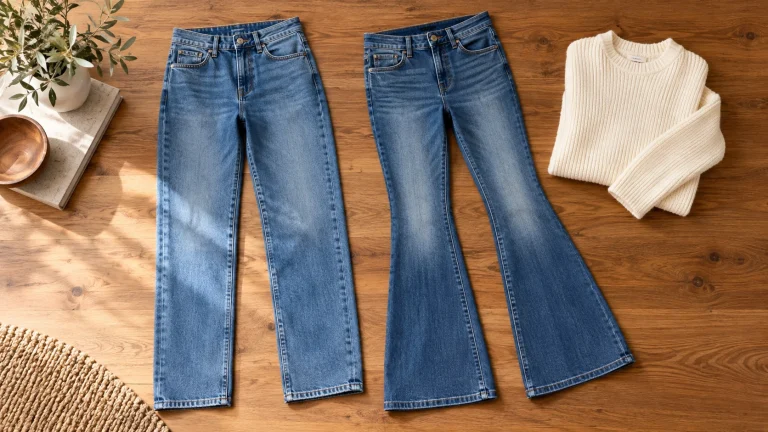
The number on a jeans label tells only part of the story. Two pairs with the same waist size can fit differently because one has a higher rise, a longer inseam, a wider leg, or more stretch. Understanding these measurements makes it easier to buy jeans online without relying on a model photo alone.
This guide explains jeans inseam and rise in plain terms, shows how to measure a pair you already own, and helps you choose a length for the shoes you plan to wear.
The inseam is the length of the inside leg seam from the crotch junction to the bottom hem. It describes the garment, not the length of your entire leg. Two people of the same height may prefer different inseams because their leg proportions and shoe choices differ.
Lay a pair of jeans that fits you well on a flat surface. Smooth the leg without stretching it, then run a tape from the crotch seam along the inside seam to the hem. Record the result and the shoe style you normally wear with that pair.

Front rise measures from the crotch seam up to the top of the front waistband. A higher rise usually places the waistband higher on the torso, but the result also depends on body shape and the back rise. “High rise” is a description, not a universal number.
Measure the rise on your reference jeans with the waistband closed and the front laid flat. If they feel comfortable when you sit, compare their measurement with the listing. A pair that looks similar on a model may sit at a different place on your waist.
Close the button and zipper, lay the waistband flat, and measure across it without pulling. Double that number for an approximate garment waist. Measure across the widest point of the hip area and double that too. Brands may measure at slightly different points, so a published size chart takes precedence.
Compare garment measurements with jeans you already own, not just body measurements. A stretch jean may appear smaller laid flat yet expand during wear. Cotton content, elastane percentage, and fabric weight all affect how a pair feels.
Trysho's high-waist vintage flare jeans are a useful example of why waist, rise, and hem all matter together. Check the current garment chart and composition for your chosen size.
For straight jeans with flats or loafers, a hem near the ankle can keep the shoe visible. For full-length flares, the fabric can approach the floor while remaining clear of it when you walk. With a heeled boot, test the actual heel height rather than estimating from a product photo.
If you plan to wear the same jeans with very different shoes, a slightly cropped straight leg is often more forgiving than a floor-length flare. Stand and walk in the complete outfit before deciding on a hem alteration.

“Cropped” describes an intended look rather than a fixed number of inches. A cropped leg can reach the ankle on a petite shopper and expose more of the calf on a taller one. “Regular” and “long” are also brand-specific.
Look for the actual inseam in inches or centimeters. If none is listed, use the model's height only as a rough visual reference, then ask the seller for a garment measurement. A cropped style that ends at the widest part of your calf may look different from one that ends at the narrow ankle.
Straight, flare, and wide-leg jeans can share an inseam yet look different once worn. A wide hem may fall over a shoe, while a narrow hem may stop at the shoe's upper. Fabric drape and the width at the knee influence the visual length.
For outfit planning, compare Trysho's wide-leg trousers with a denim flare to see how broad hems interact with footwear. The same basic measurement principles apply, even though the fabrics behave differently.
Prioritize a comfortable fit at the waist and hips. A hem can often be shortened, but adding missing room across the seat is much harder. If the jeans are stretchy, look at how the fabric recovers after wear rather than assuming a tight pair will relax permanently.
Read the return terms before removing tags or washing. Try the jeans at home with the underwear, belt, and shoes you intend to wear. Sit, climb a step, and check whether the waistband remains in place.
Some denim may shrink or relax according to fiber content and washing instructions. Follow the garment label. Washing dark jeans inside out with similar colors in cool water is commonly recommended for color preservation, while drying methods vary by product.
Do not buy a clearly uncomfortable size on the assumption that it will stretch, and do not rely on a hot wash to correct a large waist. Choose the right cut and measurements first; care maintains the fit rather than inventing it.
Jeans inseam and rise become much easier to judge once you compare numbers from a pair you already wear. Use measurements to narrow the choices, then check movement and comfort when the new pair arrives.