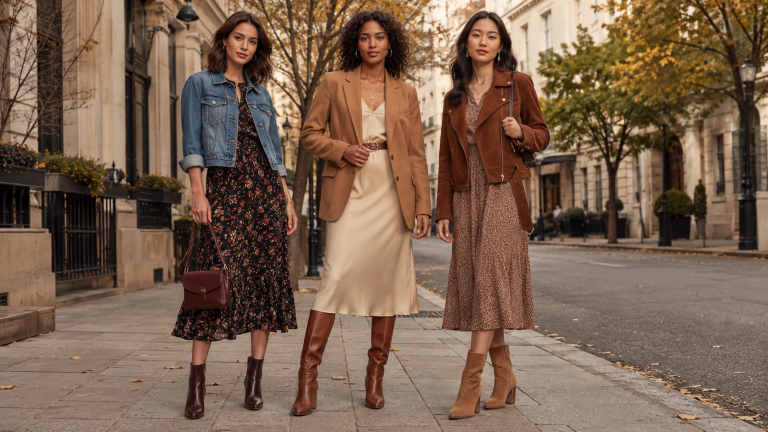
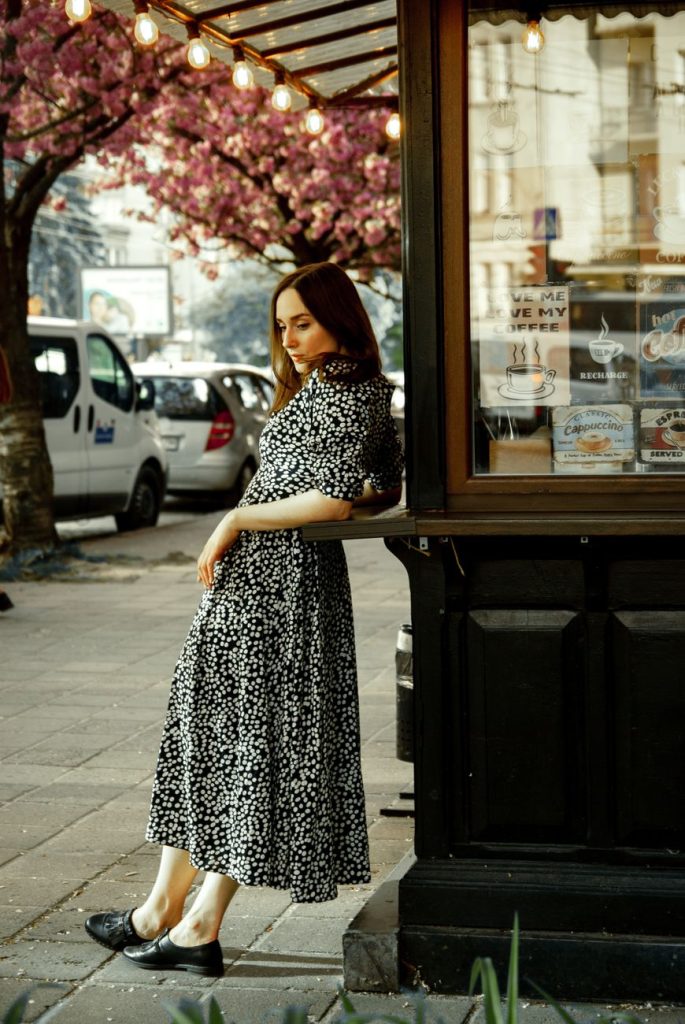
“Midi” and “maxi” are helpful descriptions, but they cannot tell you exactly where a dress will finish on your body. Your height, torso length, the garment’s cut, and its measurement method all influence the final hem position.
Learning how to measure dress length makes online shopping more practical. Instead of guessing from a model photograph, you can compare the listed length with a dress you already own and identify the hem placement you prefer. You do not need specialist equipment: a flexible measuring tape and a clear product size chart are enough to begin.
Many dresses are measured from a shoulder reference point down to the hem. However, not every retailer uses the same starting point. Some listings describe skirt length, center-back length, or measurements for a particular size.
Check the accompanying diagram when available. A waist-to-hem measurement cannot be compared directly with a shoulder-to-hem measurement. Strapless dresses and designs with adjustable straps may use different reference points altogether.
If the starting point is unclear, ask before ordering. A precise number is only useful when you understand what that number represents.
Choose an existing dress with a hem you enjoy wearing. Place it on a clean, flat surface, smooth it gently, and avoid stretching the fabric. Follow the same measurement method used by the product listing as closely as possible.
For a shoulder-to-hem comparison, locate the listed shoulder reference point and measure down to the bottom edge. Keep the tape straight rather than following every small fold.
Write down the length and the dress’s silhouette. A fitted knit, relaxed A-line, and wrap dress may not hang identically, even when their flat measurements are similar. Your existing garment is a reference, not a guarantee of identical fit.
Think about the activities you expect to do while wearing the dress. A work dress needs to feel comfortable when sitting and walking. A long vacation dress should allow a manageable stride and avoid dragging along the ground.
Trysho’s cotton-linen A-line midi dress is one example to compare when you prefer a relaxed silhouette. Check the measurements for your selected size rather than assuming that the word “midi” identifies one fixed length.

When assessing a hem on your body, stand naturally and consider the dress with the shoes you intend to wear. A shoe’s height changes ground clearance, even though it does not change the garment’s actual measured length.
Length should not be considered separately from bust, waist, and hip measurements. A dress that is too close-fitting may pull upward or sit differently from the intended silhouette.
Check whether the size chart shows body measurements or finished-garment measurements. Finished garments may include ease—the extra room that allows movement—but the amount varies by design.
Do not automatically choose a smaller size to shorten a dress or a larger size to lengthen it. That can compromise the fit elsewhere. Select an appropriate fit first, then consider whether a hem alteration is realistic.
A belt can lift part of a loose dress when fabric is bloused above the waist. Adjustable straps can change where the neckline and hem sit. Wrap construction can also influence how the garment falls.
Trysho’s V-neck wrap midi dress with pockets provides a different shape to evaluate. Compare its sizing information and neckline arrangement along with the length.

If you intend to belt an unstructured dress, test that styling on a similar garment before ordering. Measure the unbelted dress for an accurate comparison, then note how much your preferred styling lifts its hem.
Petite shoppers do not need to avoid longer dresses, and tall shoppers are not restricted to particular labels. The more useful approach is comparing the actual length and checking how the rest of the garment fits.
Look at the position of the waist seam, pockets, neckline, and sleeves. A hem can sometimes be altered, but a waist seam sitting in the wrong place may be more difficult to address.
For a long dress, leave enough clearance for comfortable walking. For a shorter dress, check the amount of coverage you prefer when sitting, reaching, and climbing steps. Your comfort matters more than matching the model photograph.
Plain hems may be simpler to shorten than designs with decorative borders, pleats, lace, lining, or a shaped lower edge. A local tailor can advise on the construction and likely cost.
Do not assume every dress can be lengthened. That depends on the available hem allowance and whether releasing it would leave marks or change the design.
When building a complete outfit, streamlined footwear such as Trysho’s Tabi-inspired slip-on flats can provide another reference for hem clearance. Choose the shoe first if you expect to alter the dress specifically for that outfit.
Confirm the measurement starting point, select the correct size chart, compare the length with an existing garment, and consider the planned footwear. Then review the dress’s waist position and construction.
If any key measurement is missing, clarify it rather than relying on a style label. Knowing how to measure dress length cannot remove every uncertainty from online shopping, but it gives you a much stronger basis for deciding whether a dress fits your everyday life.