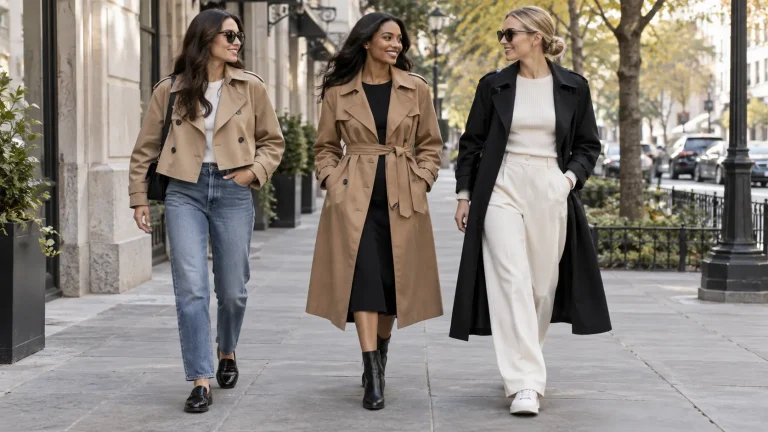
A blazer does not need to be tightly fitted to look polished. Fitted, relaxed, cropped, and oversized designs can all work when their proportions are intentional and you can move comfortably. The difficulty is separating a deliberately generous cut from a jacket that simply does not fit.
If you are wondering how a women’s blazer should fit, begin with the shoulders, then check the body, sleeves, and movement. Assess it with the clothing you actually plan to wear underneath. A blazer that feels comfortable over a camisole may behave differently over a blouse or sweater.
Before choosing a size, identify the design. A fitted blazer usually follows the waist more closely. A relaxed version provides additional room, while a cropped blazer intentionally finishes higher on the torso.
An oversized design may have dropped shoulders or a straighter body by construction. Do not evaluate it against every rule for traditional tailoring. Instead, compare its product photographs and measurements with the shape you want.
Trysho’s TRZA double-breasted office blazer is one option to evaluate for a structured look. Check the selected size’s measurements and the room you need beneath its double-breasted front.

In a traditionally tailored blazer, the shoulder seam generally sits close to the natural shoulder edge. The fabric should fall smoothly rather than creating obvious dents, pulling, or an unsupported overhang.
Lift your arms gently and reach forward. Some restriction is normal compared with a stretch T-shirt, but ordinary activities should remain manageable. Check whether the back feels tight when you type, drive, or carry a bag.
Shoulder construction can be difficult to alter, so prioritize it when comparing jackets. A tailor can explain what is realistic for a particular garment, especially when it has padding or complex seams.
Fasten the blazer as intended and stand naturally. The lapels should sit comfortably, and the front should not pull sharply around the closure. Strong diagonal tension lines may indicate insufficient room or an unsuitable cut.
Check the bust and waist together. Sizing up can help in some cases, but a different style may provide a better balance than a much larger jacket. There is no single cut that fits every torso identically.
If you normally wear the jacket open, check that appearance too. The fronts should fall in a way you enjoy without repeatedly sliding off your shoulders.
A blazer should accommodate your usual clothing without compressing sleeves or making the neckline uncomfortable. Trysho’s satin-finish blouse provides one kind of smooth base layer to consider.
A blouse with fuller sleeves needs more space than a close-fitting tank. A thick sweater can also change the way the jacket hangs. Decide which combination matters most before choosing your size.

When shopping online, compare the finished measurements with a blazer that already fits over a similar layer. Body measurements and garment measurements are not interchangeable, so read the size chart’s explanation carefully.
Traditional full-length blazer sleeves often finish around the wrist area, but cropped or three-quarter designs intentionally expose more of the arm. The useful question is whether the sleeve length matches the jacket’s intended style and your preference.
Relax your arms by your sides, then bend them. The cuffs should not become inconvenient while working, eating, or carrying items. If you plan to show a blouse cuff, check the two garments together.
Sleeve shortening may be possible, but decorative buttons, working buttonholes, and lining can complicate the alteration. Ask a tailor before assuming it will be a simple adjustment.
A cropped blazer can keep a high waistband visible. Hip-length versions work with many trousers, jeans, and skirts, while longer designs create a more relaxed vertical line.
Check the jacket with your most frequently worn bottoms instead of judging it alone. A long, straight blazer may feel balanced with narrow pants but create more volume over a full skirt.
For a dress outfit, notice where the blazer hem meets the dress’s widest area. You are looking for a deliberate relationship between the pieces, not a universal length rule based on height.
Sit down, reach forward, and bend your elbows. Check for uncomfortable pressure around the upper arms, bust, or back. If the jacket rises slightly with movement, that does not automatically mean it is wrong; consider whether it settles comfortably afterward.
Also test your usual bag. A shoulder strap can compress padding or slip from a smooth sleeve. Trysho’s contrasting-color shoulder bag is an example of an accessory to consider alongside the jacket rather than afterward.
Avoid buying a noticeably uncomfortable blazer on the assumption that it will stretch substantially. Material, lining, and construction influence how much a garment can change with wear.
Different brands and designs use different measurements. Your usual size is only a starting point, and selecting another size is not a statement about your body.
Prioritize comfortable shoulders, enough space for your base layer, and a front that hangs as intended. Then consider sleeve and hem adjustments if necessary. Knowing how a women’s blazer should fit helps you choose tailoring that supports your routine, whether you prefer traditional structure or a deliberately relaxed silhouette.