You may love the size of a crossbody bag and still dislike wearing it. A narrow strap can dig into a shoulder when the bag is loaded; an extremely wide strap can feel bulky over a coat or slide awkwardly near the neck. Width is only one part of comfort, but it is an easy detail to miss in product photographs.
This crossbody strap width guide helps you match a bag to what you actually carry. The best choice depends on the bag’s weight, strap material, placement, your clothing layers, and how long you walk. A slim strap may be ideal for a phone and keys, while a broader one can feel steadier with a larger daily load.
You do not need to use a rigid rule based on body type. Measure a strap you already enjoy, try your usual contents, and notice where pressure collects. The following checks make an online comparison much more useful than a close-up photo of hardware.
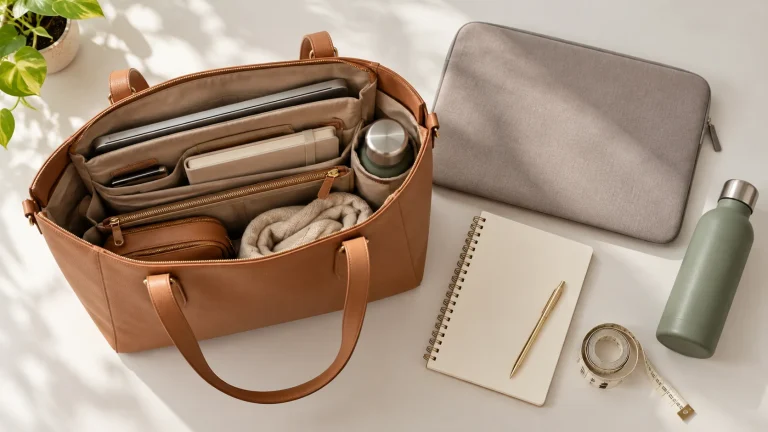
Empty your bag and place your normal essentials beside it. Include the phone, keys, wallet, water bottle, cosmetics, and any items that travel with you only on workdays. A narrow strap on a tiny evening bag is a different proposition from the same strap on a bag carrying a bottle and a paperback.
If the bag becomes uncomfortable after ten minutes, remove one or two heavier items and try again. That simple test separates a load problem from a strap problem. A wider strap spreads contact over a larger area, but it cannot turn an overfilled handbag into a weightless one.
Use a ruler to measure the strap across its flat section. Then feel its edges. A soft broad strap may mold to the shoulder, while a stiff one with sharp edges can still press despite its width. Very smooth straps may slip off slick outerwear; textured fabric may grip better but rub delicate knits.
Look at the connection points as well. A strap wider in the middle but narrow near the clips can twist. Hardware should turn freely and sit flat. If the strap is detachable, check whether its attachment style and hardware are compatible before buying a replacement.
Slim straps look refined with dresses, blazers, and dinner outfits. They are most comfortable when the bag and its contents remain light. Try carrying only a phone, card case, keys, and lip balm for an evening. The compact small leather crossbody is one shape to compare with your own essentials.
Place the strap away from the base of your neck. It should cross the torso without pulling a blouse collar sideways. If the bag bounces against your thigh, adjust its length before concluding that the strap width is wrong.

A broad strap can stabilize a bag used for commuting, shopping, or travel. It may sit more comfortably over a coat and distribute pressure when you carry a notebook or a few additional items. Trysho’s canvas shoulder bag is worth comparing for everyday capacity, though you should confirm its current strap specifications on the listing.
Wide straps become part of the outfit. A cream or tan strap can brighten a black coat; a dark one keeps a printed dress visually quiet. If it crosses a tailored blazer, check whether it creases the lapel or pulls the shoulder pad out of place.
The same width can feel different depending on where the bag lands. A bag that rests high on the waist usually moves less than one at the upper thigh. Try it while standing, walking, and sitting. A strap adjusted too short may press near the neck, while one too long may swing and rub clothing.
For a more detailed length measurement, see Trysho’s crossbody strap length guide. Width and length should be assessed together. Measure from the top of the bag to its lowest point on your body, not only the strap’s advertised total length.
A crossbody fitted over a summer T-shirt may feel shorter and tighter over a winter coat. Try the bag with the thickest layer you normally wear. Make sure you can remove and put on the coat without catching the strap on buttons, a hood, or scarf.
The genuine-leather cloud crossbody offers a different, softer silhouette to consider. Compare its strap attachment and adjustable range against the way you plan to wear it. Product images can show a styling position, but your height and layers determine the actual drop.

Adjust length, reduce the load, or try a different strap material before buying another bag. If you feel persistent discomfort, choose a smaller load or a different carrying method.
Some bags have detachable clips; others have fixed straps. Check the hardware shape, clip opening, attachment width, and weight rating before ordering a replacement. The new strap should not overload small rings or abrade a soft bag. A removable strap can also change the look from formal to casual, but function comes first.
Do not assume that an inexpensive wide guitar-style strap will fit every bag. Compare the two clips with the bag’s rings and test that each closes fully. If there is doubt about the hardware’s strength, avoid using it for a heavy load.
The most comfortable crossbody strap is the one that suits your normal contents and clothing, not the widest strap available. Start by measuring a bag you already enjoy. Then compare width, edge softness, adjustability, attachment points, and where the loaded bag lands while you walk.
A slim strap can finish a light dinner bag beautifully; a broader, flexible strap may serve a workday more comfortably. Try both over the outerwear you actually wear. A few minutes of testing can prevent a purchase that looks right in a photo but feels wrong on your shoulder.
Try the bag with the coat or jacket you wear most often before deciding whether the strap feels right.