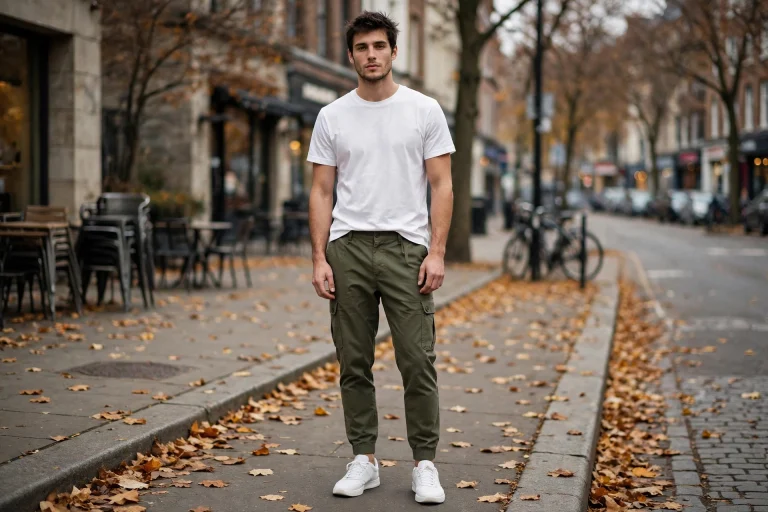
Layering is the most useful skill in a man’s winter wardrobe, and also the easiest to get wrong. Add one jumper too many and you look bulky, feel restricted and overheat the moment you step indoors. Get it right, however, and you stay warm outdoors, comfortable inside, and able to adjust your outfit through the day simply by removing one piece. Late November is the perfect time to learn the system, because temperatures now swing between chilly mornings, mild afternoons and cold evenings. The secret is not owning more clothes. It is choosing layers that each do a clear job, fit close enough to sit under the next one, and look good on their own if you need to take the top layer off.
Every good layered outfit begins next to the skin. In winter, a plain cotton T-shirt works for mild days, but a long-sleeved thermal top or a fine merino base layer is far better when it is properly cold. Merino wool regulates temperature, resists odour and stays comfortable if you move between a heated train and a frosty street. Choose a snug but not tight fit, because trapped air is part of how the layer keeps you warm, and loose fabric bunches under knitwear. Keep colours simple: white, grey, navy and black disappear under almost everything. Avoid sporty logos and high collars that fight with shirt collars. If you run warm, a lighter base layer with a heavier jumper above it is usually more comfortable than the reverse.
Your middle layer does most of the warming, so choose knitwear by thickness. A fine-gauge crew neck or V-neck in merino or a wool blend slides easily under a blazer or coat and looks smart enough for work. Save chunky knits for days when your outer layer is roomy, such as a relaxed overcoat or a padded jacket, or wear the chunky knit as the top layer itself with just a coat over it. A quarter-zip is a practical modern option: zipped up it protects your neck, opened slightly it shows the shirt or T-shirt beneath and stops the outfit feeling sealed in.
Roll necks deserve a mention because they replace both jumper and scarf. A dark roll neck under a tailored coat is one of the simplest smart winter looks a man can wear, and it suits almost every age and build.

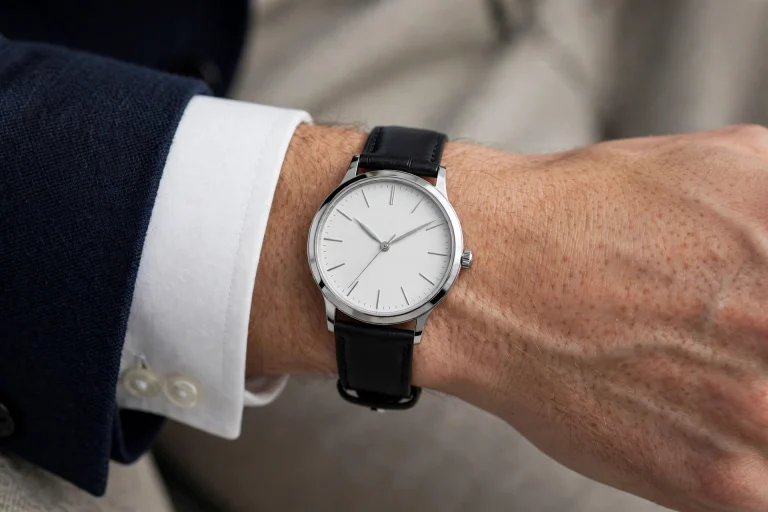
A shirt is not just for summer or the office. Worn open over a T-shirt, a flannel or overshirt adds warmth and texture without the weight of a jacket, which is ideal for milder winter days and heated indoor spaces. Buttoned up under a crew neck, a shirt collar frames the face and instantly makes knitwear look more polished; let the collar sit neatly and show a small amount of cuff at the wrist for a deliberate finish. Oxford shirts in white or pale blue are the most versatile, while checked flannel shirts bring a relaxed, weekend feel that pairs well with jeans and boots.
The rule with shirts is to watch the bulk at the shoulders and waist. A slim or regular fit layers cleanly, while a very loose shirt creates folds that push your jumper out of shape.
Your jacket or coat is the layer everyone sees, and it has to fit over everything beneath it. When you try on winter outerwear, wear a jumper to the shop or check the product measurements carefully: you should be able to raise your arms, drive and fasten the coat without the shoulders pulling. A tailored wool overcoat is the smartest option for work and evenings, a padded or puffer jacket gives the most warmth for casual wear, and a lined parka handles the worst weather. If you only buy one, choose the one that matches most of your week, not the one you wish you lived.
Length matters for warmth. A coat that ends mid-thigh keeps far more heat in than a short jacket, and it looks better over layered knitwear because it covers the different hem lengths below. Room to layer is not the same as wearing a size too big: the shoulder seam should still sit close to your own shoulder.

Layering looks best when the pieces are easy to tell apart. Mix textures rather than matching everything exactly: a smooth coat over a ribbed knit, a matte flannel shirt under a fine jumper, or a quilted jacket over a plain crew neck. For colour, the safest approach is one family of tones, such as navy, grey and black, with one contrasting layer, perhaps a burgundy or camel jumper, to create interest. Avoid wearing three loud colours at once, because each layer shows only partly and the result can look untidy.
Keep proportions in check by letting each layer be slightly visible. Show a strip of shirt beneath your jumper, a little jumper beneath your coat, and keep the longest layer on the outside. If everything ends at exactly the same point, the outfit looks like one solid block.
Most bulk problems come from small things, not the big pieces. Thick seams stacked at the same shoulder point, a hood worn under a coat, or a scarf stuffed inside a jumper all add lumps. Wear hoods outside or choose coats with their own hoods, drape scarves over the coat rather than under it, and avoid layering two collars that compete, such as a roll neck under a high-neck jacket.
Finally, test every new combination at home. Walk around, sit down and take the coat off. If each layer looks presentable on its own and nothing pulls, twists or rides up, you have a combination you can trust on a cold morning when there is no time to think. That is the real goal of layering: warmth and comfort that look effortless.
Ready to build your own combinations? Browse the TRYSHO men’s jackets and coats collection to find the outer layer that finishes the look, from smart overcoats to warm padded styles: shop men’s jackets and coats at TRYSHO.
TRYSHO
New arrivals & outfit ideas, first — straight to your inbox.
TRYSHO
Welcome to Trysho — here’s 10% off your first order:
WELCOME10
Tap the code to copy it
Use it at checkout — it never expires.
Start Shopping