Shoes that feel fine during a five-minute fitting may become uncomfortable after several hours of standing or walking. The best option depends on your foot shape, workplace, floor surface, daily distance, and required dress code.
No single shoe works for everyone. Instead of relying only on labels such as “comfort” or “walking,” compare the fit, cushioning, stability, outsole, and construction.
This guide explains how to choose comfortable shoes for standing all day and when sneakers, loafers, or boots may be appropriate.
Measure both feet late in the day, when they may be slightly larger. Use the larger measurement when comparing the brand’s size chart.
Your toes should rest naturally without touching the front or being compressed from the sides. The heel should feel secure without excessive rubbing or slipping.
Do not assume that painful shoes will stretch enough after several wears. Some materials soften slightly, but the length and basic structure will not change significantly.
Browse Trysho’s women’s shoe collection to compare flats, loafers, sneakers, boots, sandals, and other designs. Always review each product’s individual measurements and specifications.
The toe box is the front area surrounding the toes. It should allow them to rest without overlapping or pressing against the sides.
Round and softly squared toes usually provide more usable space than sharply pointed shapes. However, appearance alone is not enough; internal width and height vary between shoes.
Wear the socks or hosiery you normally use when trying on footwear. A shoe that fits with bare feet may become tight with work socks.
Cushioning can reduce the hard feeling of standing on concrete, tile, or other firm surfaces. Press the footbed and consider whether the midsole feels protective without being unstable.
More cushioning is not automatically better. Very soft foam may feel pleasant initially but may not provide the stable platform you prefer throughout the day.
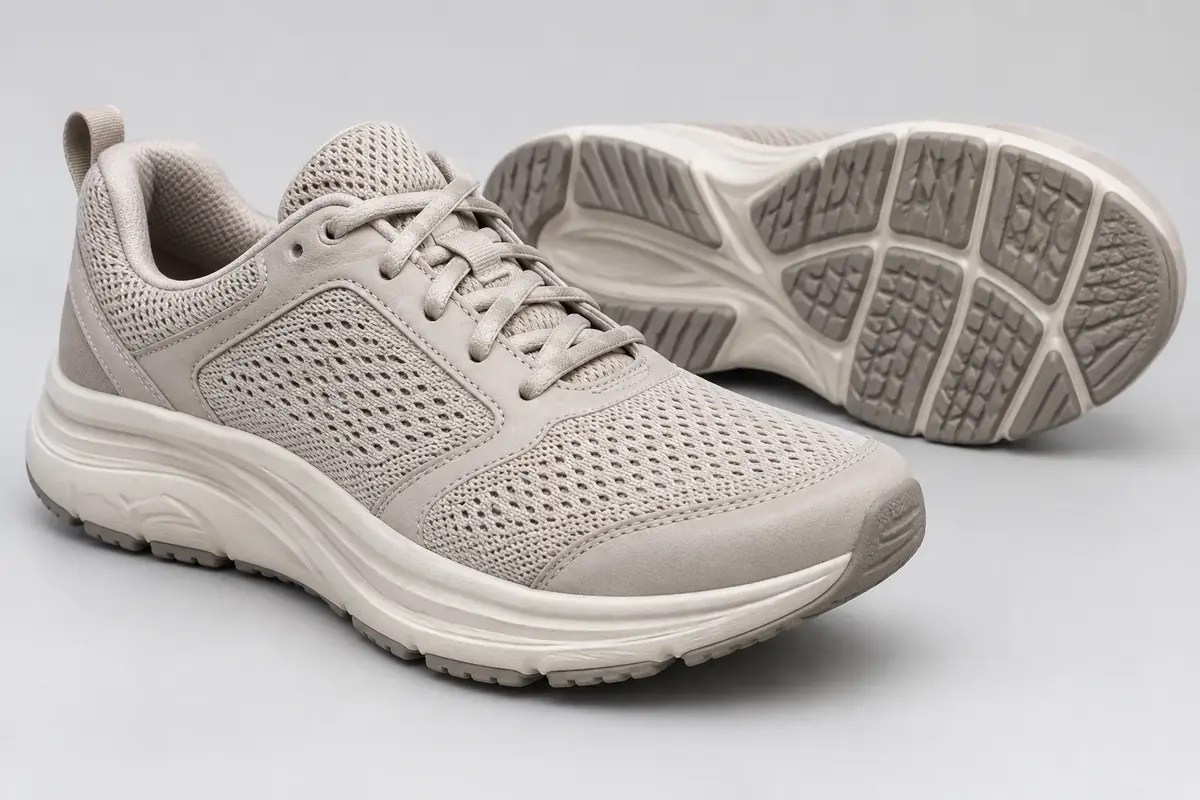
Trysho’s breathable platform sneakers provide a casual lace-up option with a substantial sole. Review the complete product description and decide whether the construction suits your workplace and activities.
The shoe should resist unwanted side-to-side movement while allowing a comfortable walking stride. Check whether the heel sits securely and whether the sole feels balanced under your body.
People have different support requirements. A design that feels ideal to one person may be uncomfortable to another, especially when foot shape, previous injuries, or medical conditions differ.
If you have persistent foot, ankle, knee, or back pain, seek advice from an appropriate healthcare professional rather than relying solely on general shopping guidance.
The outsole is the part that contacts the floor. Look for a tread and material appropriate for the surfaces where you work.
Restaurants, healthcare settings, factories, shops, and offices may have different requirements. A workplace may specifically require slip-resistant, protective, closed-toe, or safety-certified footwear.
A fashion shoe should not be treated as safety equipment unless its specifications confirm the necessary certification. Follow your employer’s rules.
Laces allow fit adjustments across the top of the foot. Adjustable straps can help secure flats and sandals, while elastic panels make some slip-on styles easier to wear.
Loafers should hold the heel without constant slipping. Trysho’s Japanese-style Tabi flats use a slip-on design with a rubber sole and distinctive split-toe shape. Their unusual construction makes checking the size information especially important.
Avoid tightening closures enough to create pressure or numbness. Feet may change slightly throughout a long shift.
Different environments call for different footwear.
Loafers, supportive flats, clean sneakers where permitted, and low stable heels can complement professional clothing. Prioritize a secure fit and sufficient room for normal movement.
Consider cushioning, secure closures, and an outsole suited to the floor. Follow any dress-code or slip-resistance requirements.
Lightweight sneakers or comfortable slip-ons are practical when you walk between stations and remain on your feet for long periods.
Choose weather-appropriate boots with suitable traction and insulation. Fashion boots may not be designed for ice, deep snow, or extended outdoor work.

A heavy shoe may contribute to fatigue when worn for many hours, although some substantial designs feel stable and protective.
Hold the shoes and compare their weight with a pair you already wear comfortably. Also consider whether a thick platform changes your balance or walking pattern.
The objective is not always the lightest shoe—it is a construction that feels natural during your actual routine.
Wear new shoes at home or for short outings before using them for a full workday. This helps identify rubbing, pressure, or heel movement while you still have another option available.
Do not attempt to “break in” significant pain. Blisters, numbness, and sharp pressure are signs that the fit or shape may be unsuitable.
Check the retailer’s return policy before wearing shoes outdoors extensively.
Alternating shoes can change pressure points and allow each pair to dry between uses. Rotation may also extend the life of the lining and cushioning.
Try one sneaker-style pair for walking-intensive days and a polished loafer or flat for office-focused days. The best rotation depends on your dress code.
Keep both pairs clean and inspect the soles for uneven wear, compression, or loss of grip.
When trying on footwear:
A short fitting cannot fully reproduce a long shift, but careful testing reduces obvious problems.
Not necessarily. A well-fitting sneaker can be useful, but its cushioning, stability, fit, and workplace suitability matter more than the category name.
Yes, when they fit securely and provide appropriate space and construction for your feet. Very thin, unsupportive soles may feel harsh on firm floors.
Do not automatically size up. Use actual measurements and the brand’s size chart. A shoe that is too long can allow sliding and rubbing.
Finding comfortable shoes for standing all day requires more than choosing a soft insole. Check toe room, heel security, cushioning, stability, outsole grip, shoe weight, and workplace rules.
Test new footwear gradually and rotate pairs when practical. Most importantly, choose shoes for your own foot shape and routine rather than assuming that one popular design will work for everyone.